Where Men Solved America's Problems One Haircut at a Time
Where Men Solved America's Problems One Haircut at a Time
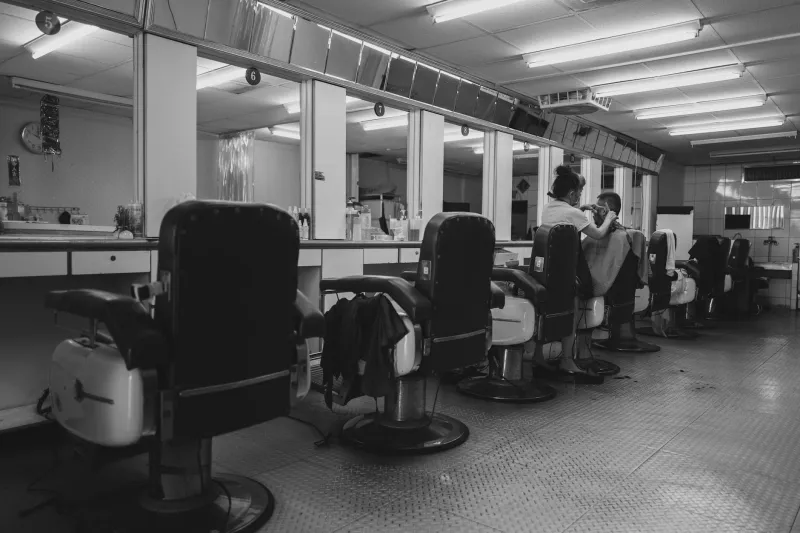
Every Tuesday at 3 PM, Frank Moretti would close his barbershop for exactly one hour. Not for lunch, not for appointments — but for what regulars called "the council session." Five or six men would gather in the red leather chairs, discussing everything from local politics to business opportunities, from family troubles to investment advice. These weren't customers anymore; they were community members using Frank's shop as their unofficial town hall.
 Photo: Frank Moretti, via image.shutterstock.com
The $3 Investment in Social Capital
In 1975, a haircut at Moretti's cost $3. But what customers really paid for was access to a network that money couldn't buy elsewhere. The barber chair was a democratic institution where the bank president sat next to the factory worker, where the retired teacher debated politics with the young entrepreneur, where three generations of men maintained connections that transcended economic boundaries.
This wasn't accidental. Traditional barbershops were designed as social spaces. The layout encouraged conversation — chairs facing each other, magazines that sparked discussions, and enough time between customers for real dialogue. Barbers themselves served as moderators, facilitating introductions and keeping conversations civil.
The economics worked because the barbershop model was built for community, not efficiency. Most shops had one or two barbers who knew every customer's name, family situation, and personal history. They could afford to take time because their overhead was minimal and their customer relationships were measured in decades, not transactions.
The Original Business Incubator
Some of America's most successful partnerships began in barbershop chairs. Men would share business ideas during their monthly trims, finding partners, investors, and advisors within their grooming routine. The shop served as an informal chamber of commerce where handshake deals were common and personal reputation was the only credit check that mattered.
Jim Rodriguez started his construction company after meeting his first contractor in Moretti's chair. "I mentioned I was thinking about leaving the factory, and three guys immediately started talking about opportunities in construction. By the time I left that day, I had a job offer, a mentor, and a five-year business plan."
 Photo: Jim Rodriguez, via c8.alamy.com
These weren't networking events — they were organic relationship-building that happened naturally when men from different backgrounds spent time in the same space regularly. The barber shop created what economists now call "weak ties" — casual relationships that often prove more valuable for career advancement than close friendships.
The Wisdom Exchange
Beyond business opportunities, barbershops served as informal universities where older men mentored younger ones. Conversations ranged from practical advice ("Never buy a car without checking the transmission") to life philosophy ("Save 10% of everything you make, no matter how little it is").
These weren't formal mentoring relationships. They were casual interactions that happened while men waited for their turn in the chair. A college student might overhear a successful businessman explaining investment strategies. A young father could get parenting advice from men who'd raised their own families. A recent immigrant might learn unwritten cultural rules that no handbook could teach.
The barbershop was particularly valuable for men who didn't have access to other professional networks. While country clubs and business associations served the wealthy, the neighborhood barbershop was open to anyone who needed a haircut. For $3, working-class men could access the same kind of informal education and networking that others paid hundreds to join private clubs to obtain.
The Economics of Time and Trust
What made barbershops effective networking hubs was their unhurried pace. A haircut took 30-45 minutes, but men often spent hours in the shop, reading papers, discussing current events, and building relationships. This time investment was economically feasible because barbershops operated on different principles than today's efficiency-focused businesses.
Barbers built wealth through customer loyalty, not volume. Frank Moretti cut hair for three generations of the same families. His customers didn't shop around for cheaper options because they valued the relationships and community as much as the haircut. This loyalty allowed barbershops to operate profitably while maintaining their social function.
The trust built in these spaces had real economic value. Men would recommend each other for jobs, vouch for character when someone needed credit, and share business opportunities. The barbershop served as a character reference system that helped members access economic opportunities they couldn't obtain through formal channels alone.
The Franchise Revolution
The decline of traditional barbershops began in the 1980s with the rise of unisex salons and franchise chains. These new businesses optimized for efficiency and profit margins rather than community building. Appointments replaced walk-ins. Conversations gave way to background music. Personal relationships were replaced by standardized service.
Supercuts and similar chains could offer cheaper haircuts by maximizing throughput and minimizing overhead. But they couldn't replicate the social infrastructure that made traditional barbershops valuable. A 15-minute appointment with a rotating stylist doesn't create the conditions for meaningful relationship building.
The economics had shifted. Real estate costs made small neighborhood shops expensive to operate. Insurance requirements, licensing regulations, and competition from chains made the traditional barbershop model financially challenging. Many barbers retired or sold their businesses to developers who converted the spaces into more profitable uses.
The Subscription Economy Replacement
Today's men's grooming market has moved toward convenience and customization rather than community. Subscription services deliver razors and grooming products to homes. High-end salons offer premium experiences with online booking and minimal waiting. Mobile barbers provide on-demand service at offices and homes.
These innovations solve efficiency problems that traditional barbershops couldn't address. Modern men can get better haircuts faster, often at competitive prices. They can avoid waiting, schedule around busy lives, and access specialized services that neighborhood shops couldn't provide.
But efficiency came at the cost of community. Modern grooming is a transaction, not a relationship. Men get better haircuts but lose access to the informal networks, mentorship, and social connections that barbershops once provided.
The Networking Gap
The decline of traditional barbershops left a gap in America's social infrastructure that hasn't been adequately replaced. While women often maintain social connections through various activities and organizations, men lost one of their primary community gathering spaces.
Modern networking happens through LinkedIn connections, professional associations, and organized meetups. These formal structures serve specific purposes but can't replicate the organic, cross-generational, cross-class relationships that developed naturally in barbershop settings.
The result is a more fragmented society where men from different backgrounds have fewer opportunities for casual interaction. The bank president and factory worker no longer sit in adjacent chairs, sharing perspectives and building mutual understanding.
What We Traded Away
The evolution from neighborhood barbershops to modern grooming services represents a classic trade-off between efficiency and community. We gained convenience, selection, and often better technical service. We lost a social institution that facilitated relationships, mentorship, and informal economic networks.
Frank Moretti's barbershop closed in 1998. The space is now a cell phone store with fluorescent lighting and no chairs for waiting. The business is probably more profitable per square foot, but it serves only individual transactions, not community building.
Some cities are seeing barbershop revivals, with entrepreneurs trying to recreate the traditional model. But the economics are challenging. High rents, insurance costs, and competition from efficient alternatives make it difficult to operate profitably while maintaining the unhurried pace that made original barbershops valuable.
The question isn't whether modern grooming services are better than traditional barbershops — they're different solutions for different priorities. But it's worth recognizing what we lost when we optimized away one of America's most democratic social institutions, where the price of admission was just the cost of a haircut.