Your News Arrived With a Face: How Information Went From Personal to Algorithmic
The Boy Who Knew Your Morning Routine
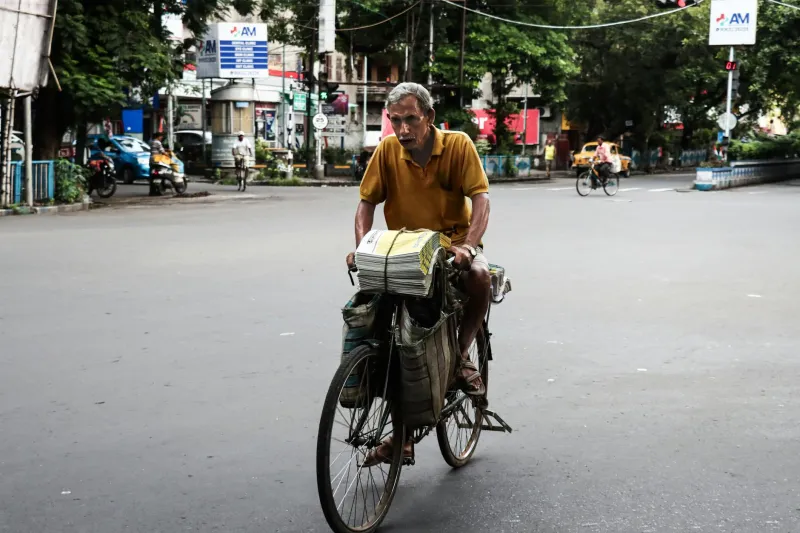
Every morning at 5:47 AM, Tommy Martinez would pedal down Elm Street, his canvas bag heavy with the day's news. He knew Mrs. Henderson preferred her paper tucked behind the storm door, that the Johnsons' German Shepherd would bark twice but never bite, and that Mr. Chen always left a thermos of hot chocolate on cold December mornings.
 Photo: Mrs. Henderson, via britishperioddramas.com
 Photo: Tommy Martinez, via media.distractify.com
 Photo: Elm Street, via images.moviesanywhere.com
This was how America got its news for nearly a century — through a human chain that connected printing press to front porch. The paperboy wasn't just delivering information; he was weaving himself into the fabric of neighborhood life, one driveway at a time.
Today, your news arrives through fiber optic cables and cellular towers, curated by artificial intelligence that knows you clicked on three political articles last Tuesday and spent 47 seconds reading about celebrity divorces. The delivery system has become infinitely more sophisticated, yet somehow, we feel more disconnected from our news than ever.
When Subscription Meant Relationship
In 1975, subscribing to a newspaper meant more than handing over money for information. It meant joining a community conversation that happened on your terms, at your kitchen table, with your morning coffee. The local paper arrived the same time every day, rain or shine, because Tommy — or kids like him in thousands of American towns — made it their personal mission.
The relationship was beautifully simple. You paid the paperboy directly, often from a cigar box of quarters kept by the front door. If you went on vacation, you'd tell him to stop delivery. If you had a complaint about a late paper, you'd mention it the next time you saw him riding by. The feedback loop was immediate, personal, and effective.
The paper itself reflected this intimacy. Local reporters covered city council meetings, high school football games, and the annual pie contest at the county fair. You might disagree with the editorial page, but you knew the editor probably lived three neighborhoods over and shopped at the same grocery store.
The Algorithm That Never Sleeps
Fast-forward to today's news ecosystem, and the personal touch has vanished entirely. Your morning news doesn't arrive at a predictable time — it floods your phone continuously, 24 hours a day, seven days a week. There's no Tommy Martinez ensuring you get the complete picture; instead, there's an algorithm that's constantly calculating what will keep you scrolling.
This digital paperboy knows things about you that the real Tommy never could. It tracks how long you spend reading each article, which headlines make you click, what time of day you're most likely to share political content, and whether you prefer video or text. It knows if you're a morning news reader or a midnight scroller, if you finish articles or just skim headlines.
Yet for all this data collection, something fundamental has been lost. The algorithm doesn't care if you're getting a balanced view of the world — it cares about engagement. It doesn't worry about your neighborhood or community; it's optimizing for global patterns that keep billions of users hooked.
The Anxiety Engine
Perhaps most troubling, this shift from personal to algorithmic delivery has changed how news makes us feel. The paperboy brought you the world once a day, in a package you could finish, fold, and set aside. Today's news stream is infinite and urgent, designed to make you feel like you're always missing something important.
The old system had natural limits. A newspaper could only fit so many stories, and once you'd read it, you were done until tomorrow. The digital news cycle has no such boundaries. Breaking news alerts interrupt dinner, work, and sleep. The algorithm learns that anxiety drives clicks, so it feeds you more of what worries you most.
Studies show that Americans who consumed news primarily through newspapers in the 1990s reported feeling more informed and less anxious than today's digital news consumers, despite having access to far less information. The difference wasn't the quantity of news — it was the quality of the delivery system.
What We Gained and Lost
There's no denying the advantages of digital news delivery. We have access to reporting from around the globe, can fact-check claims in real-time, and can dive deep into topics that interest us most. Breaking news reaches us instantly rather than waiting for the next day's paper.
But we've traded the trusted neighborhood paperboy for a faceless algorithm that doesn't have our best interests at heart. We've exchanged the ritual of morning news reading for an constant drip of information that follows us everywhere. We've swapped community connection for global awareness, often losing our sense of place in the process.
The paperboy knew your name and your preferences, but he also knew when to stop delivering. Today's news algorithm knows infinitely more about you, but it never knows when you've had enough.
The Human Touch in Information
Looking back, the paperboy system seems almost quaint — a teenager on a bicycle carrying the day's news to a few hundred houses. But that simplicity created something we've struggled to replicate in the digital age: trust, routine, and human-scale information delivery.
Tommy Martinez didn't track your reading habits or sell your data to advertisers. He just made sure you got your news, on time, every day. In our rush to make information delivery more efficient, we might have forgotten that the best delivery systems aren't just about speed and personalization — they're about creating sustainable relationships between people and the information they need to be good citizens.
The paperboy is gone, replaced by algorithms that never sleep and never stop learning about us. Whether that's progress depends on what we think news delivery should accomplish — and whether we're willing to accept that more data doesn't always mean better service.