Dinner Used to Just Be Dinner: How Cooking at Home Became a Lifestyle Statement
In 1962, the average American housewife spent roughly five and a half hours a day on food-related tasks — planning, shopping, preparing, cooking, and cleaning up. Nobody called it a passion project. Nobody documented it for an audience. The pot roast didn't need a hashtag. It just needed to be on the table by six.
Flash forward to today, and cooking has been completely reinvented as an identity. People spend $400 on a Dutch oven. They follow celebrity chefs on social media. They describe themselves as "foodies" the way previous generations might have said they were into fishing or woodworking. The act of preparing a meal has been culturally elevated from chore to craft — and in the process, it's quietly become something that not everyone can afford to participate in.
The Kitchen as Necessity, Not Novelty
For most of American history, cooking at home wasn't a choice — it was the only option. Restaurant dining was reserved for special occasions or travel. Convenience foods barely existed. If you wanted to eat, someone in the household cooked. Full stop.
The economics were straightforward. Buying raw ingredients and preparing them at home was dramatically cheaper than any alternative, and alternatives were limited anyway. Families in the 1940s and 1950s built weekly menus around what was seasonal, what was affordable, and what stretched. A whole chicken became Sunday's roast, Monday's sandwiches, and Tuesday's soup. Nothing was wasted because nothing could afford to be.
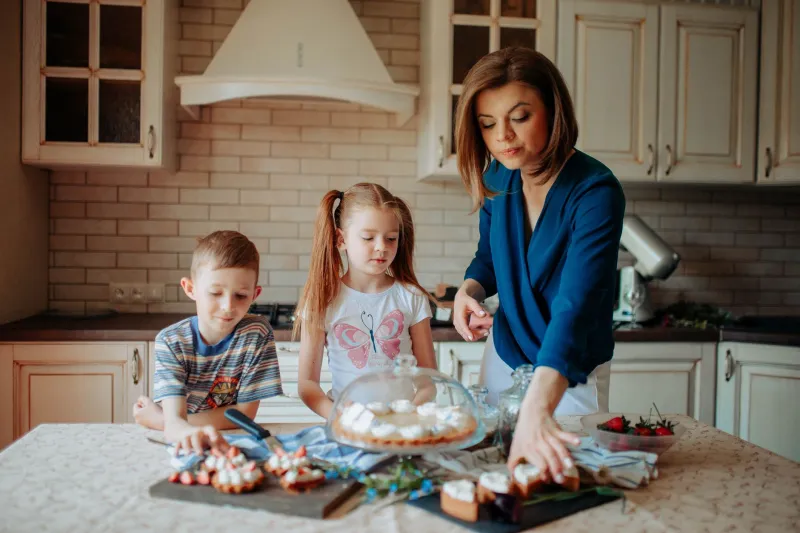
Cooking knowledge passed through families the way all practical knowledge did — by watching, helping, and eventually doing. You learned to make biscuits because your mother made biscuits and you stood next to her while she did it. You knew how to stretch ground beef because that's what the budget required. These weren't skills you sought out; they were skills you absorbed by living in a household where cooking was constant.
The kitchen was also the social center of the home in a way that's largely disappeared. Neighbors dropped by and ended up staying for dinner. Extended family gathered around tables for hours. The act of feeding people was inseparable from the act of connecting with them.
How the Shift Happened
The transformation didn't happen in a single moment. It was a long, slow accumulation of changes that each made perfect sense on their own but added up to something nobody quite intended.
The first wave was convenience food. Post-World War II, food manufacturers aggressively marketed processed and pre-packaged products as liberation — particularly for women entering the workforce in larger numbers. TV dinners, canned soups, boxed cake mixes. The pitch was freedom: you no longer had to spend hours in the kitchen. Time-pressured households accepted the tradeoff enthusiastically, and the food industry invested billions in making convenience feel normal.
Then came the dual-income household. As women moved into the workforce in earnest through the 1970s and 1980s, the time available for cooking shrank dramatically — and nobody filled the gap. Men largely didn't pick up the slack in the kitchen. The answer, increasingly, was takeout, fast food, and the expanding ready-meal section at the grocery store.
By the 1990s and 2000s, food had fragmented into two distinct cultural categories. Everyday eating became faster, cheaper, and more processed. Meanwhile, cooking as a performance and a hobby began to flourish among a specific demographic — people with enough time, money, and counter space to treat it as entertainment. The Food Network launched in 1993. Celebrity chefs became household names. Cooking shows multiplied. The kitchen bifurcated into a place where exhausted families heated things up and a place where enthusiasts performed elaborate weekend projects.
The Luxury Rebrand
Something revealing happened along the way: cooking from scratch got repositioned as premium.
Farmer's market ingredients. Heirloom tomatoes. Artisan olive oil. Cast iron pans handed down through generations — or, more likely, purchased new for $200 from a boutique cookware brand. Cooking shows stopped being about feeding a family economically and started being about technique, sourcing, and presentation. The language shifted from practical to aspirational.
Meal kit services like HelloFresh and Blue Apron arrived selling the fantasy of home cooking without the friction — pre-portioned, pre-planned, with glossy recipe cards and ingredients you'd never buy for a single recipe on your own. A service designed to make cooking easier ended up making it more expensive. The average meal kit dinner costs two to three times what the same dish would cost if you bought the ingredients yourself and knew what you were doing.
Today, "cooking from scratch" is genuinely correlated with income and education levels in a way it simply wasn't fifty years ago. Studies consistently show that higher-income households are more likely to cook at home using whole ingredients, while lower-income households — often working multiple jobs with less flexible schedules — rely more heavily on fast food and processed convenience items. The economics that once made home cooking universal now push people in opposite directions.
What Got Lost in the Rebrand
The practical cost is real. A family that's lost the cooking knowledge of previous generations and relies on convenience food and takeout spends significantly more on food than one that cooks from scratch. The skills that once stretched a modest income have been replaced by habits that strain a tighter one.
But there's a cultural cost too. When cooking becomes a hobby rather than a household function, it stops being something everyone participates in and becomes something a certain type of person performs. The knowledge stops flowing between generations because it's no longer embedded in daily life — it's something you seek out intentionally, often via a YouTube tutorial or a cooking class that costs $85.
The communal dimension suffers as well. Families who rarely cook together rarely eat together in the same way. The kitchen as the center of household life has given way to the kitchen as backdrop — a room you pass through on the way to the couch with your delivery bag.
The Interesting Reversal
There are signs of a counter-movement. Younger Americans, particularly those who grew up watching their parents outsource every meal, are increasingly interested in cooking as a meaningful skill. The pandemic pushed millions of people back into their kitchens out of necessity and many of them stayed. Sourdough starter became a cultural moment not because bread is trendy but because people rediscovered the satisfaction of making something from nothing.
The challenge is detaching cooking from its current luxury framing and returning it to something more democratic. Cooking doesn't require a $400 Dutch oven. It doesn't require heirloom anything. It requires time, basic knowledge, and the willingness to treat feeding yourself and the people you love as something worth doing well.
Your grandmother knew that. She just didn't call it a lifestyle.