Blue Plate Special: The 50-Cent Lunch That Fed America Together
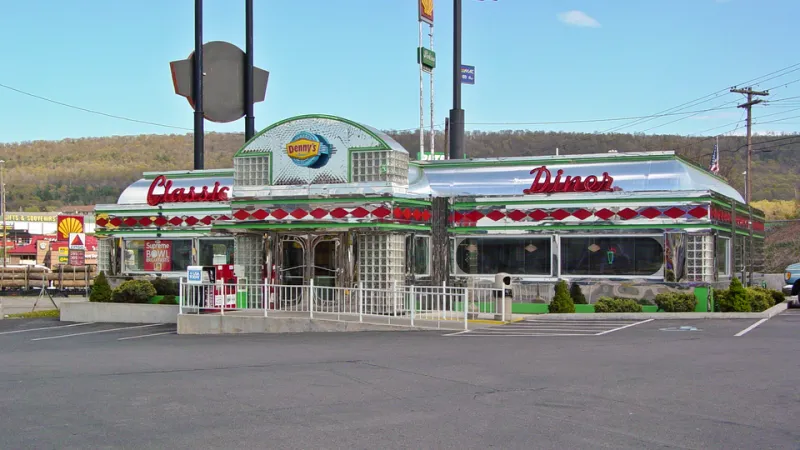
Photo: Ben Schumin, CC BY-SA 2.0, via Wikimedia Commons
For most of the 20th century, a hot lunch in America meant a stool at a counter, a short-order cook who knew your order, and a full meal for less than a dollar. The lunch counter wasn't just affordable — it was where factory workers, secretaries, and shop owners sat elbow to elbow and called it normal. That world is gone, replaced by $18 grain bowls and sad desk sandwiches, and the change says more about America than just the price of food.
Twelve Stools and a Full House
The American lunch counter reached its peak somewhere between the 1930s and the 1960s. You'd find them in Woolworth's department stores, in standalone diners, in drugstores, in hotel lobbies, and in tiny storefronts squeezed between a barbershop and a hardware store. They were everywhere, and they were busy.
The format was simple and efficient. A long counter — sometimes just eight or ten stools, sometimes thirty — faced an open kitchen where one or two cooks handled an entire menu from memory. You sat down, the counterman or counterwoman acknowledged you immediately, and within minutes you had coffee in front of you and a hot plate on the way.
The blue plate special — a term that dates to the 1920s — was the centerpiece of the lunch counter economy. A rotating daily special, usually a protein with two sides and bread, served on a divided plate and priced to be accessible to anyone who worked for a living. In the 1940s, that meant 35 cents. By the early 1960s, maybe 65 cents. Adjusted for wages rather than inflation, these were genuinely affordable meals for ordinary working people.
Who Was Sitting at That Counter
What made the lunch counter remarkable wasn't just the price — it was the mix of people who showed up. The factory worker on his half-hour break sat next to the insurance agent on a full lunch hour. The department store clerk shared counter space with the shop owner across the street. The retired man who came in every day at 11:30 was a fixture, greeted by name, his usual order started before he sat down.
This wasn't a designed social experiment. It was just the practical result of affordable food in a central location. When a hot meal costs the same for everyone and there's only one place to sit, class boundaries have a way of dissolving — at least for 45 minutes at noon.
The counter format itself encouraged a kind of casual sociability. You were close to strangers by default. Conversations started naturally. The counterman was a connector, moving up and down the line, keeping coffee hot and chatter flowing. Regular customers built real relationships — with the staff, with each other, with the rhythms of the place.
The Economics That Made It Work
The lunch counter model worked financially because it was built around efficiency and volume rather than margin per plate. Low overhead, fast turnover, simple menus with few ingredients. A skilled short-order cook could turn out 40 lunches an hour from a compact kitchen. The food was straightforward — meatloaf, pot roast, soup, grilled cheese, pie — but it was real food, cooked fresh and served hot.
Pricing was deliberately inclusive. Lunch counter operators understood that their customer base was working people who ate lunch every weekday. The goal wasn't to maximize revenue per customer — it was to fill every stool, every day, reliably. That model rewarded consistency and accessibility over premium pricing.
Compare that to the modern lunch economy. The average American now spends over $11 on a weekday lunch, with urban markets pushing that figure considerably higher. A grain bowl or a build-your-own salad in any major city routinely runs $15 to $20 before tip. Fast food, once the affordable fallback, has drifted toward $10 to $12 for a basic combo meal. Lunch has quietly become one of the more significant daily expenses in an American worker's budget.
When Lunch Went Solitary
The death of the lunch counter wasn't just about price. It was also about time and space. The mid-century lunch hour was genuinely an hour — a protected break in the workday that employers treated as a real boundary. Workers left the building, walked somewhere, sat down, ate with other people, and returned. The physical act of leaving created a psychological separation from work that had real value.
Today, the average American worker takes a lunch break of 28 minutes. More than half eat at their desks at least occasionally. The communal midday meal has been replaced by a hurried solo transaction — a delivery app order, a sad sandwich from the office kitchen, a protein bar between calls.
The spaces themselves disappeared too. Woolworth's lunch counters closed with the stores. Downtown diners gave way to fast-food chains optimized for drive-through rather than sit-down service. The neighborhood lunch counter that served the same block for forty years became a rarity, then a nostalgia item, then mostly a memory.
What That Counter Was Really Serving
Food historians and sociologists have written about the lunch counter as an unintentional democratic institution. It's not an overstatement. A space where a broad cross-section of American workers ate the same affordable food, sat in close proximity, and treated the whole arrangement as unremarkable was doing something socially valuable that we didn't fully appreciate until it was gone.
The civil rights movement understood the symbolic power of the lunch counter in ways that went beyond the food. The Greensboro sit-ins of 1960 targeted Woolworth's lunch counters specifically because those counters represented a public space that was supposed to serve everyone — and didn't. The fight to sit at that counter was a fight for full participation in ordinary American life.
Today's food landscape offers more variety, more dietary options, and more global flavors than any lunch counter ever could. But it doesn't offer what that counter offered: a hot meal, a shared space, and the quiet reminder that the person on the next stool was just a person, eating lunch, same as you.