The Bench Nobody Sits On Anymore: How America's Public Spaces Quietly Emptied Out
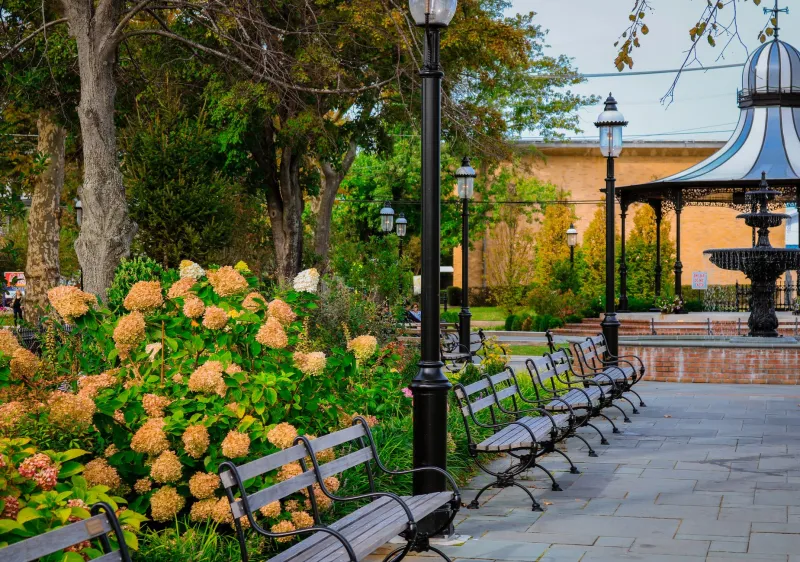
In Greenville, South Carolina, there's a stretch of renovated downtown that city planners spent years and millions of dollars perfecting. Brick sidewalks. Carefully placed trees. Benches at regular intervals. Outdoor dining. On a warm Saturday, it genuinely hums with people. City officials point to it as a model for urban revitalization.
What they don't always mention is that most American towns don't have a Greenville. They have a Main Street with three empty storefronts, a courthouse lawn nobody uses, and a park where the benches are occupied mainly by pigeons. The effort to reclaim public space is real and growing — but it's working against decades of drift in the opposite direction.
When the Town Square Was the Internet
Go back far enough in American history and public space wasn't an amenity — it was the entire social operating system. The town square, the general store, the barbershop, the church steps after Sunday service: these were the places where information traveled, relationships formed, and community identity got built in real time.
In small-town America through much of the 20th century, downtown wasn't just where you shopped. It was where you ran into your neighbor, heard about the new family that moved in on Elm Street, learned that the hardware store was closing, and discovered that your kid's friend's father had been laid off. None of that information was broadcast. It circulated person to person, in passing, through the physical act of being in shared space.
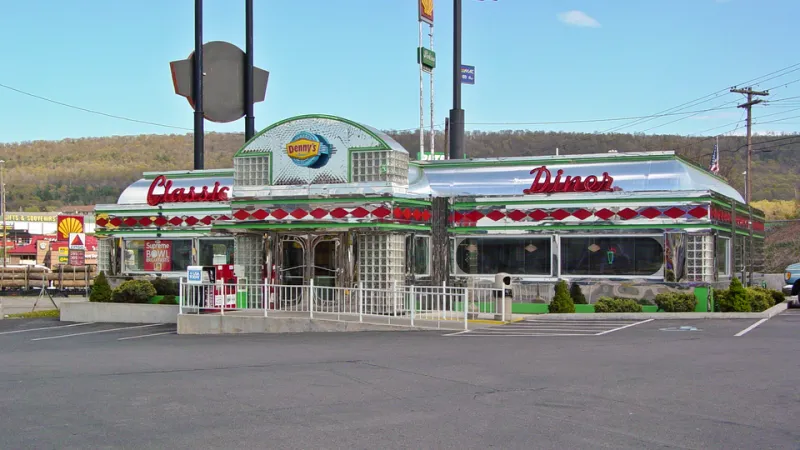
The Saturday afternoon errand run was a social event as much as a practical one. Kids played in public parks without scheduled playdates. Teenagers congregated at the malt shop or the diner not because there was nowhere else to be, but because being somewhere together was the point. Older residents sat on porch swings and watched the street. The street gave them something to watch.
These weren't idealized spaces. They had real exclusions — racial segregation meant that "public" space was often only public for some. Economic hierarchies played out visibly. Not everyone felt welcome everywhere. But even with those serious flaws, public space served a function that has proved very hard to replicate: it put people in proximity with other people they hadn't specifically chosen to be around.
The Forces That Emptied the Square
The decline didn't have a single cause. It was more like a slow accumulation of decisions, each rational in isolation, that collectively hollowed out the physical center of American community life.
Suburban sprawl was probably the most structurally significant. The post-World War II housing boom pushed Americans outward into neighborhoods designed around the car rather than the pedestrian. The suburb, by design, replaced the shared street with the private lawn. There was no town square in Levittown because the whole point was that you didn't need one — you had your own yard. The logic made sense household by household. The aggregate effect was communities without natural gathering places.
The shopping mall briefly filled the vacuum. Through the 1970s and 1980s, the mall became the de facto public square for suburban America — a climate-controlled, commercially managed version of the town center. Teenagers hung out there. Seniors walked laps for exercise. People ran into each other by accident. It was imperfect and deeply commercial, but it served a social function. Then e-commerce gutted it, and suddenly even that substitute was gone.
The smartphone arrived as the final displacement. When you can access entertainment, conversation, news, and social connection from a device in your pocket, the case for physically going somewhere to find those things weakens dramatically. Why sit on a park bench hoping to run into someone interesting when you can text the specific people you want to talk to, right now, from your couch?
The pandemic accelerated what was already happening. Remote work, delivery everything, and two years of avoiding indoor crowds rewired habits that hadn't fully snapped back. Foot traffic in American downtowns still hasn't fully recovered in many cities. Some of the businesses that once anchored those streets — the coffee shops, the bookstores, the lunch counters — never reopened.
What Gets Lost When Nobody Gathers
The obvious loss is economic. Downtowns that lose foot traffic lose businesses. Businesses that close leave empty storefronts. Empty storefronts signal decline, which discourages new investment, which accelerates the emptying. It's a self-reinforcing loop that dozens of mid-size American cities know intimately.
But the less obvious loss might be more important. Public spaces generate what sociologists call "weak ties" — relationships with people who aren't your close friends or family but who nonetheless enrich your life and expand your world. The acquaintance you see at the coffee shop every Tuesday. The neighbor you chat with while walking the dog. The stranger who notices you look lost and gives you directions.
Research consistently shows that weak ties are critical to social wellbeing, to job opportunities, to the sense that you belong to a community larger than your immediate circle. They're also almost impossible to cultivate through screens, which are optimized for connecting you with people you already know and content you already agree with.
The political dimension is real too. Civic identity — the sense of shared investment in a place and its future — has historically been rooted in physical shared space. You care about the park because you use it. You vote on the school board because you see those kids at the Saturday farmers market. When people stop gathering, that sense of collective ownership over a shared place tends to erode.
The Towns Trying to Get It Back
Across the country, there's a genuine and growing effort to reclaim public space as a civic priority. Some cities are converting parking lots into plazas. Others are investing in farmers markets, outdoor concert series, and pop-up events designed to generate the kind of accidental human contact that used to happen organically. Tactical urbanism — the practice of making small, low-cost physical changes to test whether they attract people — has become a legitimate planning discipline.
Some of it is working. Greenville is working. Parts of Detroit, Chattanooga, and Bentonville, Arkansas have genuinely revitalized their public cores. The common thread in most success stories is making the space worth showing up for — not just building benches and hoping people will sit on them, but creating reasons to be there that compete with the screen in your pocket.
The smartphone isn't going anywhere. Neither is remote work, or delivery, or the fundamental convenience of doing things from home. The question isn't whether public space can go back to what it was — it can't. The question is whether it can evolve into something that offers something the phone genuinely can't.
Eye contact. Serendipity. The stranger who becomes a neighbor. The conversation you didn't plan to have that changes something small but real about how you see your town.
That bench is still there. It's just waiting for someone to remember why it was built.