The $50 Block Party That Built America: How Neighbors Became Strangers Through Red Tape
When the Street Belonged to Everyone
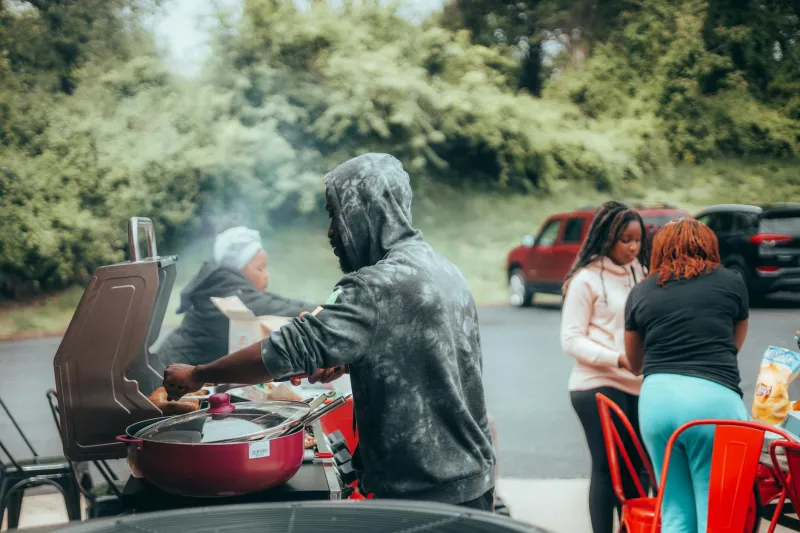
Summer Saturdays in 1970s America had a particular magic. Someone would drag a card table to the middle of the street, neighbors would emerge with folding chairs and casserole dishes, and by evening an entire block would be celebrating together. No permits, no liability waivers, no event coordinators — just people who happened to live near each other deciding to have some fun.
The total cost? Maybe fifty bucks pooled together for hamburger meat and paper plates.
That America feels like a fairy tale now.
The Beautiful Economics of Showing Up
Mid-century block parties operated on the simplest possible model: everyone contributed what they could. The Millers brought their grill. Mrs. Chen made her famous potato salad. The teenagers provided music via someone's boom box. Kids contributed energy and chaos.
Money barely mattered because labor and goodwill were the real currencies. Nobody tracked who spent what or demanded receipts. The return on investment wasn't financial — it was the knowledge that your neighbors would help if your car wouldn't start or watch your kids if you ran to the store.
These weren't planned events with committees and budgets. They were organic celebrations that emerged from communities where people actually knew each other's names.
How We Regulated Fun Out of Existence
Today's block party requires navigating a bureaucratic maze that would intimidate a corporate event planner. Street closure permits can cost hundreds of dollars and require weeks of advance notice. Liability insurance runs another few hundred. Food service permits, noise ordinances, waste management plans — the list grows longer every year.
What once required a conversation with neighbors now demands forms filed with multiple city departments. The spontaneous Saturday afternoon gathering has been regulated into a logistical nightmare that most communities simply avoid.
This isn't just bureaucratic inconvenience — it's the systematic dismantling of informal community bonds. When casual neighbor interactions require permits, people stop trying to create them.
The Professional Event Coordinator Era
Modern neighborhood celebrations increasingly require hiring actual event planners who understand permit processes, insurance requirements, and municipal regulations. What families once organized over coffee now needs professional expertise.
The cost has exploded accordingly. A basic neighborhood block party today can easily run $2,000-$5,000 when all fees, insurance, and required services are included. That's more than many families spend on vacation, for an afternoon of hot dogs and conversation with people they already live next to.
This professionalization has created a two-tier system: wealthy neighborhoods that can afford elaborate community events, and everyone else who has gradually stopped trying to organize anything at all.
The Liability Culture That Killed Spontaneity
Behind every permit requirement and insurance mandate lies America's transformation into a liability-obsessed society. The friendly neighbor who once grilled burgers for everyone is now a potential lawsuit if someone gets food poisoning. The homeowner who opened their yard for kids to play faces legal exposure if someone gets hurt.
This shift fundamentally changed the social mathematics of community gatherings. When being neighborly carries legal risk, rational people choose isolation over interaction. The cost-benefit analysis of throwing a block party now includes potential financial ruin.
We've created a system where helping your community requires protecting yourself from your community.
What Replaced the Street Party
As neighborhood celebrations became expensive and complicated, Americans found substitutes that required less coordination and risk. Private backyard gatherings replaced street-wide parties. Social media groups replaced face-to-face planning. Professional entertainment replaced neighbor-generated fun.
The result is communities of strangers who might follow each other on Nextdoor but couldn't pick each other out of a lineup. Subdivision residents who share walls but not conversations, driveways but not relationships.
Modern neighborhoods are quieter, more orderly, and infinitely lonelier than the chaotic street parties that once made summer Saturdays something to anticipate.
The Social Infrastructure We Dismantled
Block parties weren't just fun — they were the infrastructure that built social capital in American communities. They created the relationships that made neighborhoods safer, more supportive, and more resilient.
When the Johnsons' teenage son got in trouble, neighbors who knew the family from block parties rallied to help instead of calling the police. When Mrs. Rodriguez needed groceries during her recovery from surgery, she had a dozen people to call because they'd shared conversations over potato salad and lawn chairs.
 Photo: Mrs. Rodriguez, via i.pinimg.com
These connections didn't happen automatically — they required the regular, low-stakes social interactions that neighborhood celebrations provided. When we regulated those gatherings out of existence, we severed the ties that made communities more than just collections of individual houses.
The True Cost of Perfect Safety
America's obsession with eliminating risk has achieved its goal: neighborhood celebrations are now safer, more organized, and more professionally managed than ever before. They're also rarer, more expensive, and less meaningful to the people who attend them.
We've traded the beautiful chaos of neighbor-organized fun for the sterile predictability of permitted events. The gain in safety and legal protection is measurable. The loss in community bonds is harder to quantify but no less real.
The $50 block party that built America died not from lack of interest, but from an excess of caution that made spontaneous community celebration a luxury most neighborhoods can no longer afford.