The Road Trip That Once Took Three Weeks Now Takes Three Days. Here's What Changed America's Sense of Distance.
The Road Trip That Once Took Three Weeks Now Takes Three Days. Here's What Changed America's Sense of Distance.
Picture this: It's 1923. You've decided to drive from New York to Los Angeles. You've packed spare tires — plural — along with canned food, a hand-drawn map of questionable accuracy, and a deep tolerance for uncertainty. If everything goes well, you'll arrive in roughly three to four weeks. If it doesn't go well, you might not arrive at all.
Now picture the same trip today. You tap a destination into your phone, merge onto the interstate, and — with a couple of overnight stops and a few drive-through coffees — you're pulling into LA in about 40 hours of driving time. Same country. Completely different psychological universe.
The transformation of the American road trip is one of the most dramatic — and most underappreciated — shifts in everyday life over the past century. It's not just that the journey got faster. The entire meaning of distance changed.
When the Road Was the Enemy
In the early 1900s, American roads were, by modern standards, barely roads at all. Outside of cities, most routes were dirt tracks that turned to mud in rain and dust in drought. The Lincoln Highway, established in 1913 as the country's first transcontinental road, was celebrated as a breakthrough — and it was, technically. But large stretches of it were still unpaved well into the 1920s.
Drivers of that era carried what amounted to survival kits. Tire punctures happened constantly on rough terrain, and a single cross-country trip might require a dozen roadside repairs. Gas stations were clustered near cities and towns, with long, anxious gaps in between. AAA membership wasn't just convenient — it was practically a lifeline.
Navigation was its own challenge. Road signs were inconsistent, maps were unreliable, and wrong turns could cost you an entire day. Travelers often relied on locals for directions, which worked fine when locals were available and less fine when they weren't.
The experience wasn't without romance — early road trippers wrote about the freedom of open land and the thrill of self-reliance — but let's be honest: it was also exhausting, expensive, and genuinely risky.
Eisenhower Changed Everything
The single biggest turning point in American road travel came not from a car manufacturer or a tech company, but from a president who had watched the German Autobahn during World War II and returned home with a very specific idea.
Dwight D. Eisenhower signed the Federal Aid Highway Act in 1956, authorizing the construction of 41,000 miles of interstate highway — a project that would take decades to complete and fundamentally rewire how Americans related to their own country. The stated rationale was partly military: a network of wide, reliable roads that could move troops and equipment quickly in a national emergency. The civilian benefits turned out to be even more profound.
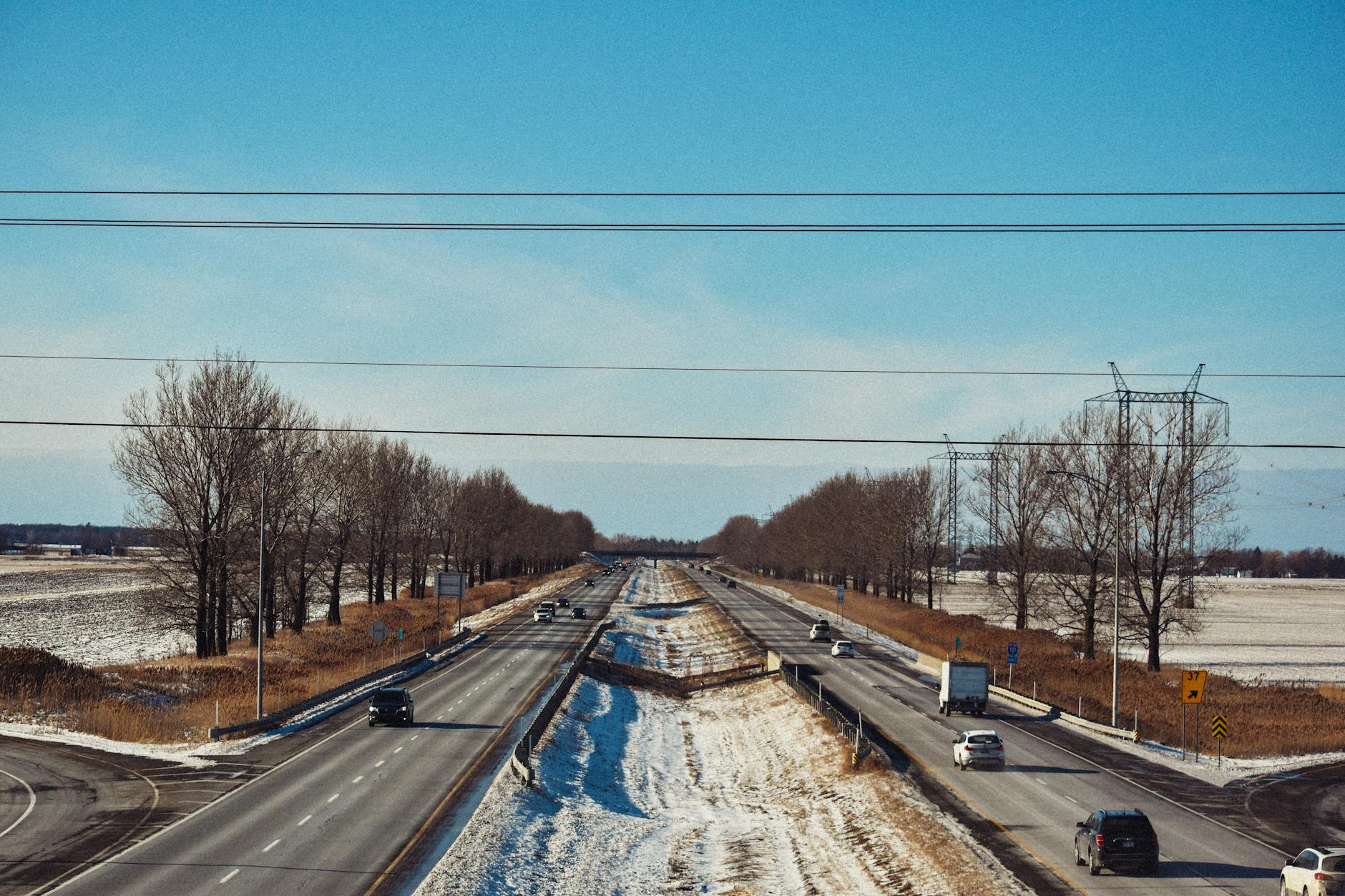
By the 1970s, the interstate system had stitched together cities and states in ways that made long-distance driving not just possible but genuinely comfortable. Speed limits were standardized. Rest stops appeared at regular intervals. Gas stations lined every major corridor. The psychological friction of distance — that nagging uncertainty about what lay ahead — began to dissolve.
The GPS Revolution and the Death of Getting Lost
If the interstate system removed the physical barriers to cross-country travel, GPS removed the mental ones.
Before turn-by-turn navigation, road trips required actual preparation. You consulted paper maps, highlighted routes, noted alternate paths, and still managed to miss exits. Getting lost wasn't a minor inconvenience — it was a built-in feature of the experience. Some people loved it. Most people didn't.
When consumer GPS devices went mainstream in the early 2000s, and then when Google Maps arrived on smartphones around 2008, something fundamental shifted. The road ahead was no longer unknown. Every turn was anticipated. Every traffic jam was rerouted around in real time. The trip became, in a sense, pre-experienced before you even took it.
Pair that with modern vehicles — cars that alert you when you drift from your lane, that brake automatically, that offer cruise control sophisticated enough to maintain safe following distances — and the driver's cognitive load on a long trip is a fraction of what it once was.
Same Miles, Different Journey
Here's what's genuinely striking about all of this: the physical distance between New York and Los Angeles hasn't changed. It's still roughly 2,800 miles. But the felt distance — the psychological weight of that journey — has been compressed almost beyond recognition.
For a 1920s traveler, crossing the country was a life event. People wrote about it in letters. They took photographs as documentation. It was, in the truest sense, an adventure.
For a modern driver, it's a long weekend. A playlist decision. A debate about whether to stop at In-N-Out in Barstow.
Neither experience is wrong. But it's worth pausing to appreciate just how much has shifted — not just in roads and technology, but in what Americans believe is possible on a Tuesday morning with a full tank of gas and nowhere to be until Friday.
The road trip didn't just get easier. America got smaller. And that changes everything about how we see the country we live in.