Lost Without a Signal: The Forgotten Art of Getting Around America
The Map in the Glove Box
There's a particular kind of anxiety that doesn't really exist anymore — the creeping, low-grade panic of realizing you've been driving in the wrong direction for twenty minutes and the next exit is still eight miles away. No recalculating. No cheerful voice telling you to make a legal U-turn. Just you, a folded paper map that refuses to fold back correctly, and a sinking feeling.
For most of American history, that was just part of driving. And honestly? People managed remarkably well.
The story of how ordinary Americans found their way around before GPS is a mix of careful planning, community knowledge, and a healthy tolerance for uncertainty. It's also a story that ended faster than most people realize — and left behind a set of skills that have almost completely vanished.
Paper Was the Platform
For decades, the road map was as essential to car travel as the keys themselves. Gas stations gave them away for free — or close to it — and most American drivers kept a small library of them stuffed in the glove compartment. State maps, city maps, regional atlases. Rand McNally's Road Atlas was a staple of family road trips, a spiral-bound book the size of a small coffee table that somehow needed to be consulted at 70 miles per hour.
Reading a map was a genuine skill. You had to understand scale, orient yourself to cardinal directions, and mentally translate a two-dimensional grid into a sequence of real-world turns. Kids in the passenger seat were often drafted as navigators, tasked with tracking progress along a highlighted route and calling out upcoming turns before they arrived — which they sometimes did, and sometimes very much did not.
The AAA TripTik: America's Original Turn-by-Turn
For serious road trippers, the AAA TripTik was the closest thing the pre-digital world had to navigation software. Members of the American Automobile Association could walk into a local office, describe their intended route, and walk out with a custom-printed strip map — a narrow, spiral-bound booklet that showed only your specific path, page by page, with handwritten notes about construction zones, tricky intersections, and points of interest.
It was remarkably effective. It was also a process that required planning days or weeks in advance, a membership, and an actual human being on the other side of the counter doing the work. Spontaneous detours were not really part of the TripTik experience.
Asking Strangers Was Normal
Here's the part that feels most alien today: when people got lost, they stopped and asked for help. Gas station attendants were a primary source of local navigation knowledge. So were diner waitresses, motel clerks, and random people in parking lots. "Excuse me, do you know how to get to Route 9 from here?" was a completely ordinary sentence to say to a stranger.
And strangers helped. They'd lean against your car window, point down the road, and say things like "go past the old Kmart, take a left at the light by the church, and you'll see the signs from there." Directions by landmark were the universal language of pre-GPS navigation. The landmark didn't need to be official. It just needed to be something locals recognized.
This created a kind of incidental social fabric around travel. Getting somewhere unfamiliar meant interacting with the people who lived there. It was slower, occasionally frustrating, and occasionally led to genuinely memorable exchanges with strangers you'd never otherwise have spoken to.
The Certainty We Take for Granted
GPS navigation became commercially available in the mid-1990s, but it was expensive and clunky for years. Dedicated devices like the Garmin and TomTom became mainstream in the early 2000s. Then smartphones arrived, and by the early 2010s, Google Maps and Apple Maps had effectively ended the paper map era for most American drivers.
The shift happened fast. A skill set that had been essential for a century became obsolete within about a decade.
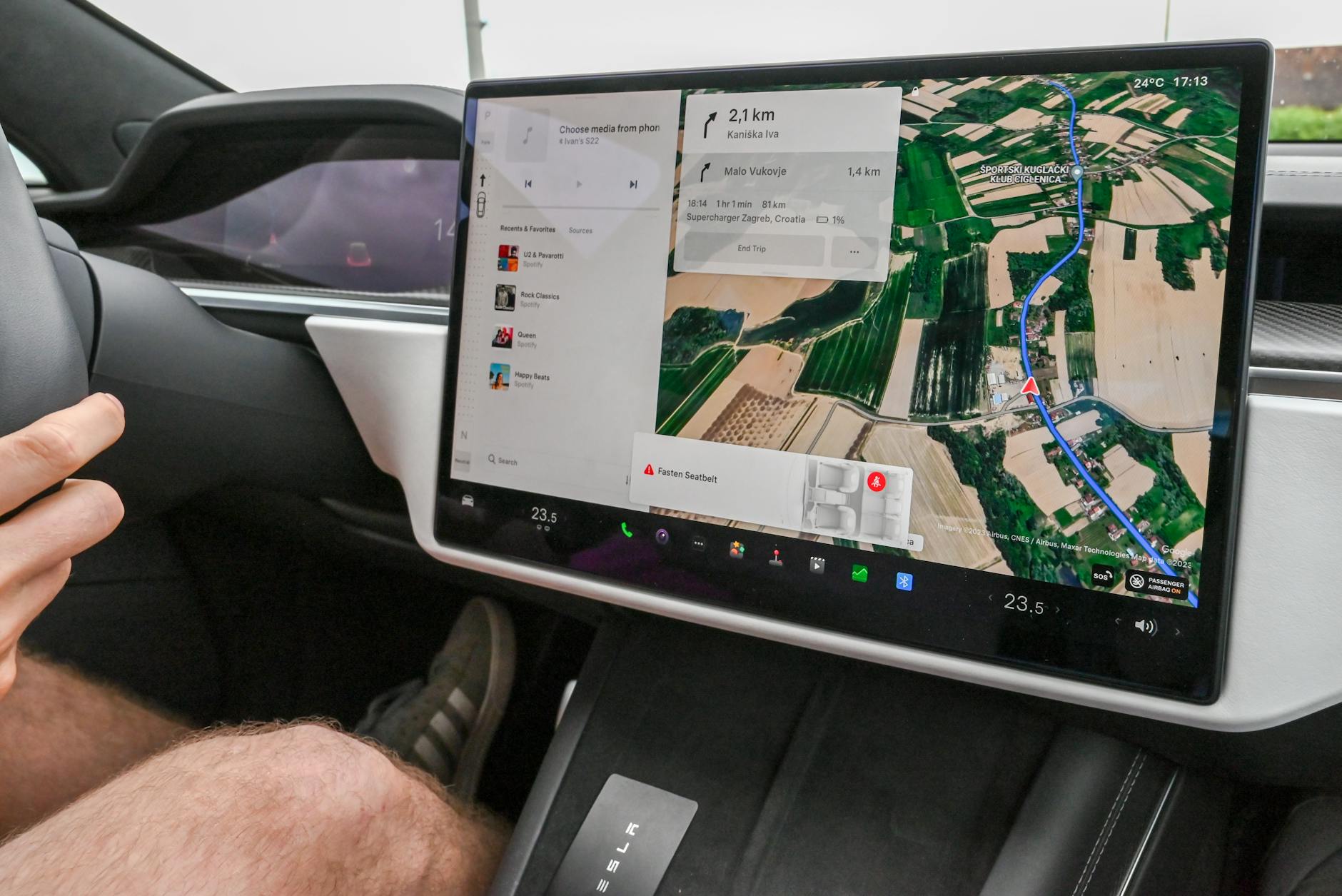
Today's drivers benefit from something that genuinely would have seemed like science fiction to anyone navigating by TripTik: real-time traffic data, satellite imagery, automatic rerouting around accidents, estimated arrival times accurate to the minute, and the ability to search for a destination you've never heard of while already moving. The cognitive load of navigation has been almost entirely outsourced to a device.
Something Small Was Lost Along the Way
None of this is an argument for going back. Paper maps were charming but genuinely inefficient, and the stress of being lost in an unfamiliar city without a data connection is not something most people would choose to relive.
But there's something worth noting in the contrast. Pre-GPS travel required preparation, patience, and a willingness to engage with your surroundings and the people in them. A road trip wasn't just a route — it was a negotiation with uncertainty. You might end up somewhere unexpected. You might have to ask for help. You might, occasionally, get genuinely lost.
The confidence that GPS provides is real and valuable. But the version of travel it replaced had its own texture — a slower, more effortful relationship with the road that shaped how Americans experienced getting from one place to another for most of the twentieth century.
Somewhere in a garage or a thrift store, there's still a Rand McNally atlas with a highlighted route and someone's handwritten note in the margin. It's a relic now. But not that long ago, it was the plan.