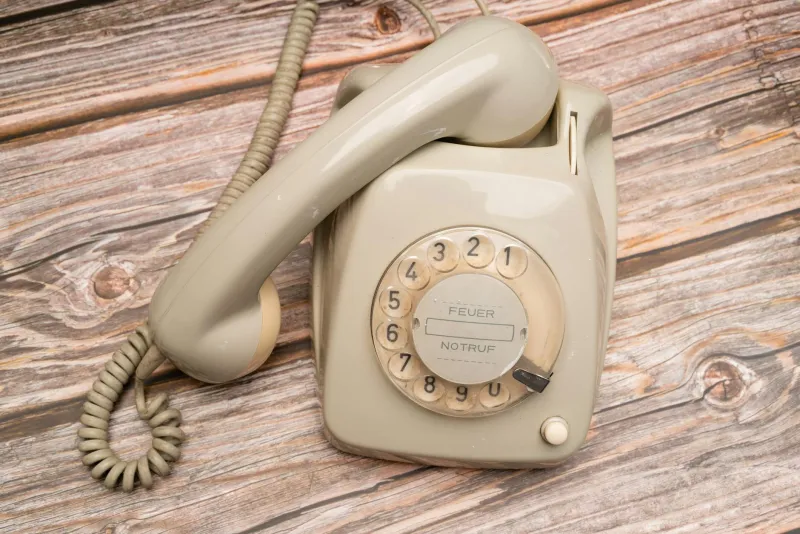
The Mental Rolodex Generation
Ask your grandmother for your uncle's phone number, and watch something remarkable happen. She'll pause for a moment, her eyes might drift upward, and then she'll rattle off ten digits without hesitation — probably the same number he's had for thirty years. Ask a twenty-five-year-old for their best friend's number, and you'll get a blank stare followed by frantic phone scrolling.
This isn't a generational joke about technology adoption. It's a fundamental shift in how human brains function in daily life, with implications we're only beginning to understand.
Until roughly 2000, memorizing phone numbers wasn't a party trick — it was a basic life skill, like knowing how to make change or read a map. The average American adult could recall between 20 and 50 phone numbers from memory: family, friends, work, the pizza place, the doctor's office, and the local taxi company. Your brain was your phone book, and it was always open.
When Memory Meant Social Currency
In 1985, knowing phone numbers by heart was a form of social capital. The popular kid at school could recite numbers for the coolest parties, the best pizza joints, and the most understanding teachers. Adults who remembered clients' numbers projected competence and care. Forgetting someone's number was almost an insult — it suggested they weren't important enough to occupy space in your mental filing system.
This created a fascinating hierarchy of memory. Your immediate family's numbers lived in the front of your mind, accessible within seconds. Close friends occupied the second tier, retrievable with a moment's concentration. Business contacts and service providers filled the deeper storage, requiring more mental effort but still reliably accessible.
The system wasn't perfect — everyone had stories of frantically dialing wrong numbers during emergencies or losing touch with someone because they'd moved and changed numbers. But it worked, and it created something we've lost: an intimate knowledge of the communication pathways that connected us to our world.
The Cognitive Load of Connection
Neuroscientists studying pre-smartphone memory patterns discovered something fascinating: people didn't just memorize numbers randomly. They created elaborate mental systems, linking digits to birthdays, addresses, or meaningful patterns. The process of memorizing a phone number actually strengthened multiple cognitive pathways simultaneously.
Remembering 555-FLOWERS wasn't just about storing seven digits — it was about creating associations, recognizing patterns, and building mental maps of social relationships. Your brain knew that certain number patterns belonged to certain neighborhoods, that specific prefixes connected you to particular social circles.
This constant mental exercise had unexpected benefits. Studies from the 1990s showed that people who regularly memorized phone numbers scored higher on tests of working memory, pattern recognition, and sequential processing. Their brains were essentially doing cognitive calisthenics every time they learned a new number.
Today's average smartphone user can access thousands of contacts instantly, but their working memory shows measurably different patterns. When you don't need to remember information, your brain literally reorganizes itself to prioritize other functions.
The Emergency That Changed Everything
The real test of America's phone number memory came during crises. When the Loma Prieta earthquake hit San Francisco in 1989, phone lines jammed immediately. People who could remember numbers from memory could try multiple contacts, cycling through friends, family, and services without needing to consult damaged phone books or inaccessible address books.
 Photo: Loma Prieta earthquake, via media.nbcbayarea.com
 Photo: San Francisco, via eskipaper.com
Contrast this with more recent disasters. During Hurricane Sandy in 2012, thousands of people found themselves completely cut off from their social networks — not because the phone infrastructure failed, but because their smartphones died and they couldn't remember a single number to call from borrowed phones.
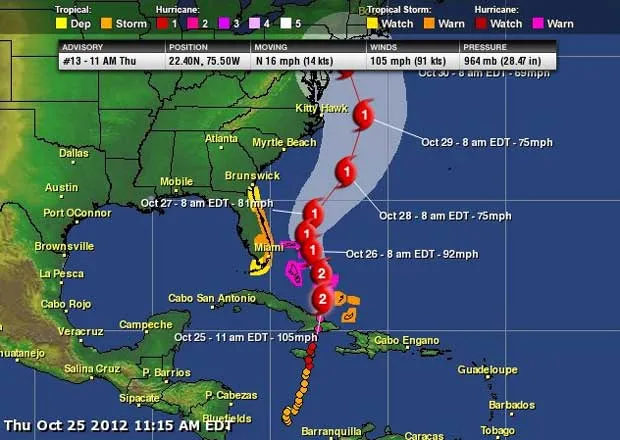 Photo: Hurricane Sandy, via 1.bp.blogspot.com
This isn't just about emergency preparedness. It reveals how completely we've outsourced basic social navigation to devices. When your phone dies, you don't just lose access to communication — you lose access to your entire social map.
The Neuroscience of Digital Amnesia
Researchers have coined the term "digital amnesia" or "Google effect" to describe what happens when brains adapt to external information storage. When we know information is easily accessible elsewhere, our minds literally decide not to retain it. This isn't laziness — it's efficiency.
But efficiency comes with costs. The mental pathways that once handled phone number storage and retrieval are now available for other tasks, but they're also atrophied. Studies show that people who rely heavily on smartphones for basic information show measurably different brain activity patterns in regions associated with memory formation and recall.
More concerning: when external memory aids become unavailable, these adapted brains struggle more than previous generations did with similar information gaps. We've traded cognitive independence for cognitive efficiency, and the trade-off has hidden consequences.
What We Lost When We Stopped Dialing
The death of phone number memory represents something larger than technological change — it marks the end of an era when human brains served as the primary interface between people and their social networks. When you memorized someone's number, you were literally encoding their accessibility into your neural pathways.
This created a different kind of intimacy. Knowing someone's number by heart meant they occupied permanent mental real estate. The act of dialing from memory reinforced social bonds through repetition and recall. Every time you called your best friend, your brain strengthened the pathways that connected you to them.
Today's contact lists are democratic but impersonal. Your smartphone treats your mother's number exactly the same as your dentist's, storing both with equal digital precision but zero emotional weight. The technology is more reliable, but the human connection is more fragile.
The Memory We Might Need Again
As our devices become more sophisticated, our brains become more dependent on them. This works fine until it doesn't — until the power goes out, the network fails, or the device breaks at exactly the wrong moment.
Perhaps more importantly, we're discovering that the act of memorization itself had value beyond mere information storage. The mental discipline required to learn and retain phone numbers strengthened cognitive abilities that served people well in many other areas of life.
The generation that memorized phone numbers didn't just remember numbers better — they remembered everything better. Their brains had practice with the fundamental skill of intentional retention, and that practice paid dividends across all areas of memory and learning.
We've gained instant access to infinite information, but we've lost the cognitive strength that comes from carrying essential knowledge in our own minds. The question isn't whether we can go back — we probably can't. But we might want to think more carefully about what we're willing to forget.