The Original Social Network
Every summer evening in 1955, the Maple Street ritual began the same way. As the dinner dishes were cleared and the sun started its descent, front doors across the neighborhood would creak open. Families would emerge onto their porches, settling into rockers and gliders for the evening's entertainment: each other.
Children would spill onto sidewalks for games of kick-the-can while adults traded stories, shared concerns, and solved problems together. Mrs. Henderson might mention her husband's upcoming surgery, knowing that casseroles would appear on her doorstep without her asking. The Johnsons would announce their vacation plans, and three neighbors would immediately volunteer to water plants and collect mail.
This wasn't Norman Rockwell nostalgia. This was the sophisticated social infrastructure that held American communities together for generations.
When Neighborhoods Functioned as Families
In post-war America, neighborhoods operated like extended family networks. The concept was so fundamental that most people never questioned it—neighbors simply took care of neighbors, the way rivers flow downhill.
Children walked freely between houses, knowing they'd find a snack at the Murphy's, help with homework at the Chen's, and a gentle scolding if they misbehaved anywhere within a three-block radius. Parents didn't arrange playdates; they simply sent kids outside knowing that the neighborhood would absorb them safely.
This wasn't just about childcare. When Mr. Patterson had his heart attack, neighbors organized meal trains before his wife even thought to ask. When the Williamses' car broke down, three different families offered rides to work without being asked. When teenagers threw parties, neighbors didn't call the police—they called parents.
The system worked because everyone understood the unspoken rules: help when needed, mind your own business when appropriate, and remember that what goes around comes around.
The Architecture of Connection
Those mid-century neighborhoods were designed for interaction. Houses sat close to sidewalks with front porches that faced the street. Backyards were unfenced, allowing children and conversations to flow freely. Garages were detached structures at the rear of lots, forcing residents to walk past neighbors' homes and encounter each other naturally.
Commercial districts were walkable and local. The corner grocery store, the neighborhood pharmacy, and the local diner served as informal community centers where residents bumped into each other regularly. These chance encounters built the casual relationships that deepened into genuine friendships over time.
Even the technology of the era encouraged connection. Party lines meant neighbors literally shared phone conversations. Television was a luxury that families watched together, often with neighbors joining in for special programs.
The Great Disconnection
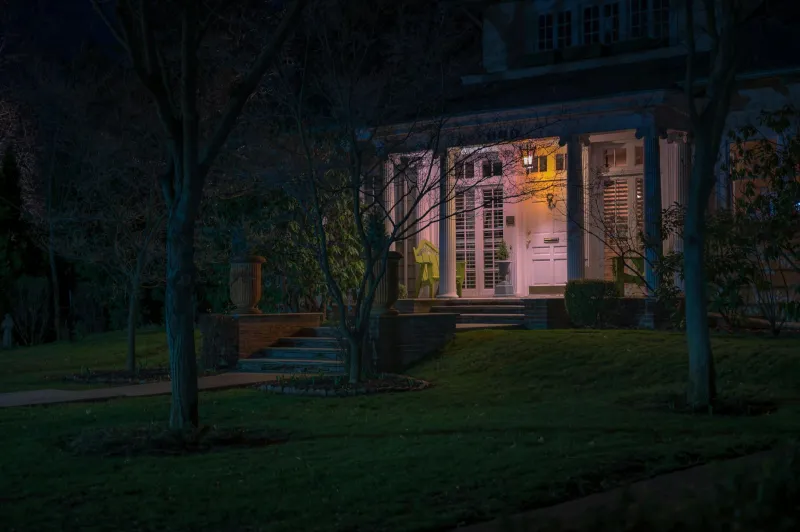
Today's suburban landscape tells a different story. Garage doors open automatically, allowing residents to disappear into their homes without encountering a single neighbor. Backyards are fenced fortresses. Front porches have been replaced by private decks facing away from the street.
The average American now knows fewer than half of their neighbors' names, compared to knowing virtually every family within a six-block radius in 1950. We've traded community for privacy, connection for convenience, and shared responsibility for individual autonomy.
This shift didn't happen overnight. It was the result of deliberate choices driven by changing values, economic pressures, and new technologies that promised to make life easier but often made it more isolated.
The Suburban Promise That Delivered Isolation
The post-war suburban boom promised families more space, cleaner air, and safer streets. It delivered on those promises but at a cost nobody calculated: the destruction of casual community interaction.
Suburban developments were designed around cars rather than pedestrians. Shopping moved from walkable main streets to drive-to strip malls and enclosed shopping centers. Children's activities became organized and scheduled rather than spontaneous and neighborhood-based.
As families gained privacy and space, they lost the daily interactions that built community bonds. The casual conversations over backyard fences gave way to scheduled social interactions that required planning, driving, and formal arrangements.
When Helping Became Hiring
Perhaps the most dramatic change has been the commercialization of community support. Tasks that neighbors once handled informally are now professional services.
Need someone to watch your kids? Hire a babysitter. Lawn needs cutting while you're away? Call a service. Dog needs walking? There's an app for that. Package delivered while you're at work? Amazon will leave it in a lockbox.
This shift represents more than convenience—it represents a fundamental change in how Americans think about interdependence. We've moved from mutual aid networks to consumer relationships, from owing favors to paying fees.
The economic implications are staggering. Americans now spend billions annually on services that neighbors once provided for free. More importantly, these commercial transactions lack the relationship-building component that made neighborhood help so valuable.
The Digital Fence
Technology has accelerated community disconnection in ways that would have seemed impossible to the front-porch generation. Social media promised to connect us but often replaced face-to-face interaction with digital relationships.
Ring doorbells and security cameras have turned neighbors into potential threats to be monitored rather than friends to be welcomed. Nextdoor apps create digital neighborhoods that somehow feel less neighborly than the physical ones they're meant to enhance.
The convenience of online everything—from grocery delivery to streaming entertainment—has eliminated many of the chance encounters that built community relationships. Why walk to the corner store and chat with neighbors when everything can be delivered to your door?
The Hidden Costs of Privacy
Modern suburban isolation comes with costs that extend far beyond loneliness. The mental health implications are well-documented: rates of depression and anxiety have skyrocketed as community connections have weakened.
The economic costs are less obvious but equally significant. Without neighborhood networks, families must pay for services that were once provided through mutual aid. The emotional support that neighbors once offered now requires professional therapy. The informal job networks that helped people find work have been replaced by expensive career counseling services.
Parenting has become exponentially more difficult without the village that once helped raise children. Today's parents feel entirely responsible for their children's safety, education, and entertainment—burdens that were once shared across entire neighborhoods.
What Some Communities Are Reclaiming
Not every American community has surrendered to suburban isolation. Some neighborhoods are deliberately trying to recapture elements of the front-porch era.
Cohousing communities design shared spaces that encourage interaction. Some suburban developments are returning to front-porch architecture and walkable layouts. Neighborhood groups organize block parties, community gardens, and informal childcare cooperatives.
These efforts face significant challenges in a culture that has forgotten how to be neighborly. Many people have to learn skills that previous generations took for granted: how to make small talk, how to offer help without being intrusive, how to balance privacy with community engagement.
The New Village
America can't return to 1955, nor should it. The old neighborhood system had serious flaws: conformity pressure, limited privacy, and social hierarchies that excluded many people.
But the current system of suburban isolation isn't working either. The mental health crisis, the parenting exhaustion epidemic, and the political polarization that comes from never interacting with people different from ourselves all point to the same conclusion: humans need community.
The challenge is figuring out how to rebuild neighborly connections in a world designed for privacy and convenience. It requires intentional effort to create the casual interactions that once happened naturally.
Perhaps the answer isn't returning to the past but learning from it. The front-porch generation understood something we've forgotten: that individual well-being and community health are inseparable. In our rush to gain independence, we may have lost something even more valuable—the knowledge that we're all better off when we take care of each other.
The village it takes to raise a child—or live a fulfilling life—is still there. It's just hiding behind garage doors and privacy fences, waiting for someone to make the first move toward connection.