
Open a savings account today and you'll be lucky to earn 0.5% annual interest — barely enough to cover inflation, if that. But rewind to 1981, and that same savings account at your local bank was paying over 10% annually. A modest $10,000 deposit would grow to $25,000 in just ten years, without the account holder needing to understand stocks, bonds, or investment strategies.
That world seems almost fictional now, but it was the financial reality that built America's middle class for decades. The death of meaningful savings rates represents one of the most significant — yet overlooked — economic shifts of the past 40 years.
When Banks Competed for Your Savings
Throughout the 1970s and early 1980s, savings accounts were the foundation of American household finance. Banks actively competed for deposits by offering attractive interest rates, often advertising their latest rates on outdoor signs like gas stations promote fuel prices today.
A typical middle-class family could park their money in a basic savings account and watch it grow substantially over time. Teachers, factory workers, and shop clerks could build meaningful nest eggs through simple saving and patience. The mathematics were straightforward: save consistently, earn solid returns, and compound interest would handle the rest.
This wasn't just theory — it was how millions of Americans actually built wealth. A postal worker who saved $100 monthly starting in 1975 would have accumulated over $50,000 by 1990, thanks to those high interest rates. No financial advisor required, no complex investment decisions needed.
The Passive Wealth Machine
High savings rates created what economists call a "passive wealth-building mechanism" — ordinary Americans could accumulate significant assets without any specialized financial knowledge. This system had profound social implications.
Families could save for major purchases like homes, cars, and college educations with confidence that their money would grow predictably. Retirement planning was simpler: work steadily, save regularly, and let compound interest build your nest egg. The basic savings account was essentially a guaranteed wealth-building tool available to everyone.
This accessibility was crucial. Unlike today's investment-focused approach to wealth building, the high-interest savings system didn't require financial literacy, risk tolerance, or market timing skills. A factory worker and a bank president could use the exact same wealth-building strategy: save money and earn interest.
The Federal Reserve's Quiet Revolution
The transformation began in the early 1980s when Federal Reserve Chairman Paul Volcker launched an aggressive campaign against inflation. Interest rates spiked to unprecedented levels — the prime rate hit 21.5% in 1980 — before beginning a long, steady decline that continues today.
 Photo: Federal Reserve, via images.skyscrapercenter.com
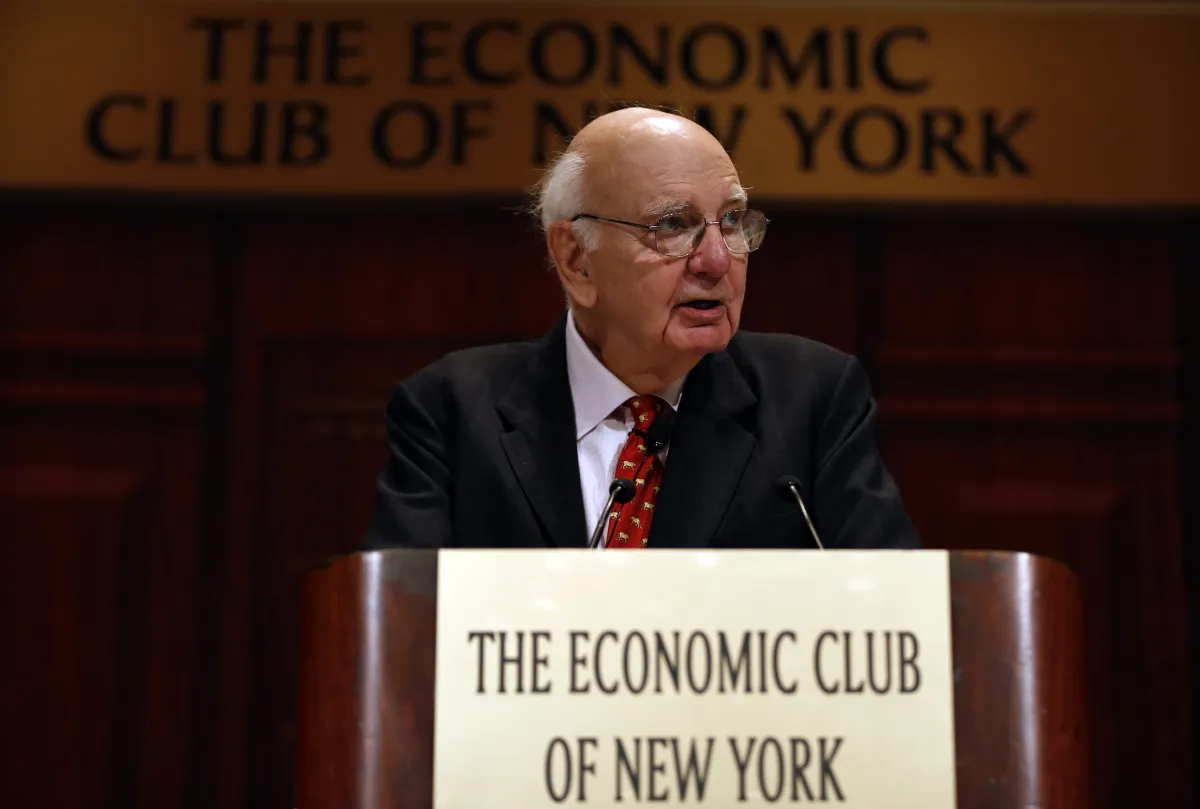 Photo: Paul Volcker, via www.brookings.edu
What started as an anti-inflation strategy became a permanent feature of American monetary policy. The Federal Reserve systematically pushed interest rates lower over the following decades, reaching near-zero levels after the 2008 financial crisis and staying there for most of the time since.
This shift fundamentally altered the relationship between saving and wealth building. As interest rates fell, traditional savings accounts became wealth-preservation tools at best, and wealth-destruction tools at worst when inflation exceeded the meager returns.
The Investment Imperative
As savings rates plummeted, financial advisors began promoting a new message: cash is trash. To build wealth, Americans would need to invest in stocks, bonds, mutual funds, and increasingly complex financial products. The simple savings account was relegated to emergency funds and short-term goals.
This shift had enormous consequences for how Americans approach their finances. Wealth building became more complicated, riskier, and dependent on financial knowledge that many people lacked. The passive income that savings accounts once provided disappeared, forcing families to either accept lower returns or navigate investment markets.
The change was particularly hard on older Americans and conservative savers who had built their financial strategies around guaranteed returns. Retirees who had planned to live off savings account interest found themselves forced into riskier investments or accepting dramatically reduced income.
The Hidden Tax on Savers
Low interest rates essentially function as a hidden tax on savers, transferring wealth from depositors to borrowers and investors. While this policy benefits people with mortgages, business loans, and stock portfolios, it penalizes those who prefer the safety and simplicity of traditional savings.
This transfer has contributed to growing wealth inequality. Sophisticated investors have benefited enormously from low rates, which inflated asset prices across stocks, bonds, and real estate. Meanwhile, ordinary savers saw their primary wealth-building tool become effectively useless.
The impact extends beyond individual finances. Low savings rates discouraged the thrift and delayed gratification that had been hallmarks of American middle-class culture. When saving doesn't pay, spending and borrowing become more attractive alternatives.
What We Lost Along the Way
The death of meaningful savings rates eliminated more than just a financial tool — it ended an entire approach to personal finance that had served Americans well for generations. The old system promoted financial stability, patience, and gradual wealth accumulation. It rewarded thrift and made financial planning accessible to everyone.
Today's investment-focused system offers potentially higher returns but requires knowledge, risk tolerance, and active management that many Americans lack. The result is a more complex, stressful relationship with money that favors the financially sophisticated over ordinary savers.
For millions of American families, the shift from savings-based to investment-based wealth building represents a fundamental change in how they must approach their financial futures. The simple certainty of compound interest has been replaced by the complex uncertainty of market returns.
That transformation helps explain why so many Americans feel financially insecure despite living in the world's wealthiest economy. The reliable wealth-building tool their grandparents took for granted simply no longer exists.