The Recipe Box Revolution
Every American kitchen once contained the same essential equipment: a wooden spoon worn smooth from decades of use, a set of measuring cups passed down from mother to daughter, and most importantly, a recipe box stuffed with index cards covered in familiar handwriting. These weren't decorative items or weekend hobbies – they were the tools of daily survival.
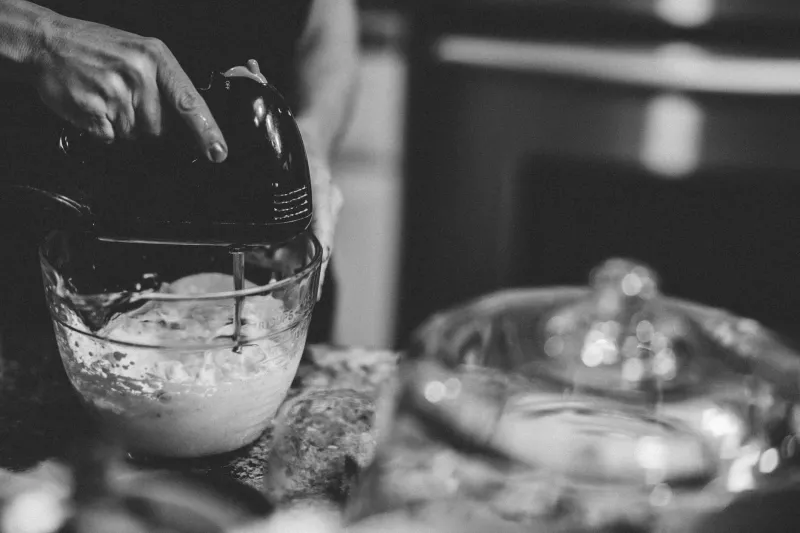
Mary Patricia O'Sullivan raised six children in 1960s Boston on her husband's electrician salary. Every Saturday morning, she'd pull flour, sugar, and eggs from her pantry and create birthday cakes that would make today's professional bakers jealous. The ingredients cost less than two dollars. The cake fed twelve people and lasted three days. Most remarkably, she never consulted a recipe – the measurements lived in her hands, the timing in her internal clock.
Today, Mary's granddaughter Jessica drives across town to pay $85 for a custom birthday cake that serves the same number of people. She's never creamed butter by hand, doesn't own a proper mixing bowl, and wouldn't know how to tell when cake batter has reached the right consistency. What changed wasn't just Jessica's skills – it was America's entire relationship with food, time, and the knowledge that once lived in every household.
When Baking Was Basic Training
Home baking wasn't a quaint hobby in mid-century America – it was economic necessity wrapped in family tradition. The average household spent 25% of its income on food, compared to 10% today, but families ate far better because mothers transformed basic ingredients into elaborate meals and desserts.
Every American girl learned to bake the way today's children learn to use smartphones: through constant observation and gradual participation. By age twelve, most could produce edible cookies without supervision. By sixteen, they managed complete holiday baking operations that would challenge today's culinary school graduates.
The knowledge transfer happened organically. Daughters stood on kitchen chairs, measuring flour while mothers shared techniques that had traveled through generations. "Add vanilla until it smells right." "Cream the butter until it looks like whipped clouds." "The cake is done when it pulls slightly from the sides." These weren't written instructions – they were embodied wisdom passed through demonstration and practice.
Men participated too, though differently. Fathers often specialized in particular desserts – Sunday pancakes, holiday pies, or special-occasion cookies. The neighborhood baker wasn't competition; he was the professional who handled wedding cakes and other elaborate orders that exceeded home kitchen capabilities.
The Ingredients of Independence
Peer inside a 1960s American pantry and you'd find the building blocks of culinary independence: five-pound bags of flour, shortening tins, vanilla extract bottles, baking powder cans, and sugar stored in containers designed for frequent use. These weren't occasional purchases – they were household staples, restocked as regularly as milk and bread.
The economics made perfect sense. A homemade chocolate cake cost roughly 75 cents in ingredients and fed eight people generously. The same celebration today requires either $12 worth of box mix and frosting containers or an $80 bakery order. Adjusted for inflation, families spent far less on desserts while eating far better ones.
More importantly, home baking provided food security that extended beyond economics. When unexpected guests arrived, competent home bakers could produce impressive desserts from pantry staples. When children requested birthday treats, parents didn't need to coordinate bakery orders or settle for grocery store compromises. The ability to create celebration foods from basic ingredients represented genuine household resilience.
The Great Convenience Exchange
The decline didn't happen overnight. It began with cake mixes in the 1950s, marketed as time-savers for busy mothers. Betty Crocker and Duncan Hines promised identical results with less effort – just add eggs and water to pre-measured, chemically balanced powder.
 Photo: Duncan Hines, via i.pinimg.com
 Photo: Betty Crocker, via static.wikia.nocookie.net
Initially, many home bakers resisted. Cake mixes produced acceptable results, but experienced bakers could taste the difference. The texture was different, the flavor less complex, the satisfaction of creation diminished. But as more women entered the workforce and time became scarce, convenience gradually trumped quality.
By the 1980s, even cake mixes seemed too labor-intensive for many families. Grocery store bakeries expanded their offerings, providing decorated sheet cakes that eliminated both shopping for ingredients and the actual baking process. The final step came with specialty cupcake shops and custom cake businesses that transformed children's birthday parties into elaborate productions requiring professional intervention.
What the Numbers Don't Show
Statistics reveal the scope of change: Americans now spend less than 30 minutes daily on food preparation, compared to over two hours in 1965. Flour sales have dropped 75% since 1970. The average American kitchen contains more gadgets than ever before but fewer basic baking tools.
What numbers can't capture is the knowledge that disappeared with those changes. Contemporary Americans can access thousands of cake recipes online but lack the foundational skills to execute them successfully. They own stand mixers but don't understand gluten development. They follow precise measurements but can't adjust recipes when ingredients behave unexpectedly.
The loss extends beyond technical skills. Home baking once connected families across generations through shared traditions and seasonal rituals. Christmas cookies, birthday cakes, and special-occasion pies carried family history in their flavors. Children learned patience, precision, and the satisfaction of creating something beautiful from simple ingredients.
The Hidden Costs of Convenience
Modern families pay premium prices for what their grandparents considered basic household production. A child's birthday party now requires budget planning that would have mystified parents in 1960. The $80 custom cake represents just one element of celebrations that have become elaborate productions requiring professional vendors.
The health implications are equally significant. Commercial baked goods contain preservatives, artificial flavors, and stabilizers that didn't exist in home kitchens. Portion sizes have expanded dramatically – today's standard cupcake contains more sugar than an entire homemade cake served in 1960.
Perhaps most importantly, the shift from home production to commercial purchase represents a fundamental change in household economics. Families once created value through skilled labor; now they primarily consume value through purchased products. The difference affects not just budgets but the basic relationship between work, skill, and family sustenance.
The Muscle Memory We Lost
Experienced home bakers possessed what athletes call muscle memory – the ability to perform complex tasks through feel rather than conscious thought. They could tell when bread dough had been kneaded sufficiently, when cake batter needed more liquid, or when cookies were thirty seconds from perfect doneness.
This knowledge couldn't be googled because it lived in hands, eyes, and noses trained through thousands of repetitions. It represented the accumulation of small failures and gradual improvements that transformed basic techniques into reliable expertise.
Today's cooking shows and YouTube tutorials attempt to recreate this transmission, but they can't replicate the daily practice that once made baking skills as natural as walking. Professional chefs train for years to develop the instincts that ordinary American women once acquired through childhood observation and teenage experimentation.
More Than Missing Skills
The disappearance of home baking represents something larger than lost culinary abilities – it's a window into how American families changed their relationship with time, money, and domestic knowledge. When convenience became the highest value, we traded skills that provided both economic advantage and creative satisfaction for products that solved immediate problems while creating long-term dependencies.
The birthday cake that nobody makes anymore wasn't just dessert – it was a demonstration of care, skill, and family investment that money can't entirely replace. Its absence reveals not just what American kitchens lost, but what American families gave up when they decided that buying became easier than knowing how to make.