When Fun Found You
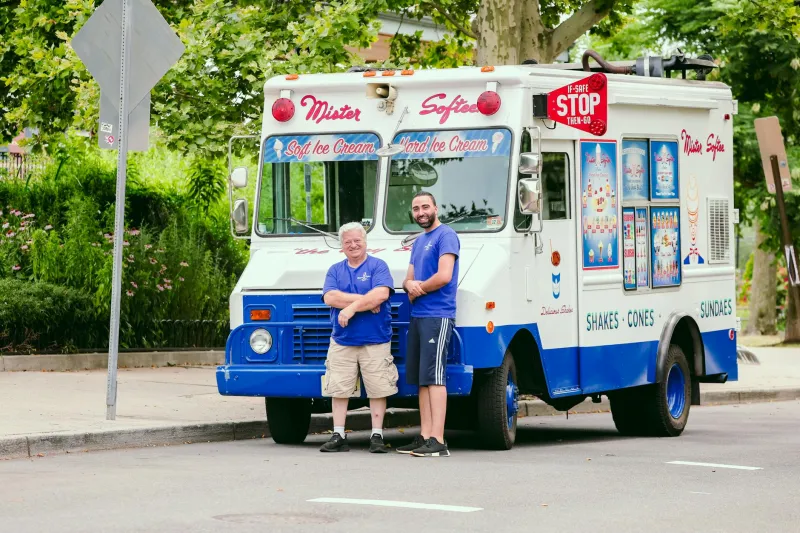
The sound hit differently in 1978. That tinkling melody of "Turkey in the Straw" drifting through suburban streets wasn't just announcing ice cream — it was triggering a neighborhood-wide scramble as kids dropped everything, begged for quarters, and sprinted toward pure, unplanned joy. No apps. No schedules. No parental coordination required.
 Photo: Turkey in the Straw, via upload.wikimedia.org
The ice cream truck was childhood's perfect algorithm: unpredictable timing, universal appeal, and a 50-cent price point that made spontaneous treats possible for nearly every family. Today, that same spontaneous joy costs parents an average of $3,400 annually in scheduled activities, enrichment programs, and curated entertainment designed to fill the exact same hours that kids once filled themselves.
The Unstructured Summer Economy
In the pre-smartphone era, a typical summer day operated on what economists might call "opportunity-based recreation." Kids woke up without plans and built their day around whatever materialized: a neighbor washing their car (instant water fight), someone's older brother setting up a slip-and-slide (free water park), or the magical appearance of the ice cream truck (community celebration).
The economics were beautifully simple. Entertainment costs for an entire summer might total $20 per child — a few ice cream purchases, maybe admission to the occasional movie matinee, and perhaps a pack of baseball cards. The rest was free, powered by imagination, neighborhood resources, and the radical idea that kids could entertain themselves without adult intervention.
Parents' role was minimal and mostly reactive. They provided basic supervision, occasional snacks, and emergency first aid. They didn't research activities, compare programs, or worry about "enrichment." Summer was understood to be a break from structure, not an opportunity for intensive childhood optimization.
The Professionalization of Play
Somewhere between 1985 and 2005, American childhood underwent a quiet revolution. Spontaneous play gave way to scheduled activities. Free-range exploration became supervised programs. The ice cream truck's random arrival was replaced by carefully planned "experiences" designed to maximize developmental outcomes.
Today's summer landscape reflects this transformation. Where kids once spent hours perfecting their bike jumps, parents now enroll them in $180-per-week "Adventure Cycling Camps." The pickup basketball game that formed naturally when enough kids gathered has been replaced by $200-per-month youth basketball leagues with uniforms, coaches, and tournament travel.
The shift wasn't gradual — it was systematic. An entire industry emerged to monetize childhood's idle hours, convincing parents that unstructured time was wasted time. Summer camps evolved from simple day care into specialized academies. Playground equipment became too liability-prone for public spaces. Even ice cream trucks began requiring permits and insurance that priced many operators out of business.
The New Economics of Childhood
Modern parents spend more on summer entertainment than previous generations spent on entire school years. A typical middle-class family now budgets $2,000-5,000 for summer activities per child, covering camps, lessons, equipment, and transportation. The "free" summer of spontaneous fun has been replaced by a carefully curated season that costs more than a family vacation.
The comparison is stark: in 1980, entertaining three kids for a summer cost roughly $60 in today's money. In 2024, the same entertainment runs $6,000-15,000 annually. The difference isn't inflation — it's the complete restructuring of how childhood leisure operates in America.
This transformation created new categories of family expense that didn't exist a generation ago. "Enrichment activities" now represent the fourth-largest category in middle-class family budgets, after housing, food, and transportation. Parents who once spent summer evenings relaxing now shuttle between soccer practice, art camp, and swimming lessons, burning both time and gasoline in service of their children's "optimal development."
The Safety Excuse
Much of this shift gets justified through safety concerns, but the data tells a different story. Childhood injury rates haven't dramatically changed, but our perception of risk has been transformed by 24-hour news cycles and social media amplification of rare tragedies. The statistical chance of something bad happening during unstructured play remains virtually identical to what it was in 1975 — but our tolerance for even theoretical risk has evaporated.
This safety-first mentality created a market opportunity that businesses quickly filled. If parents were afraid to let kids roam freely, entrepreneurs would provide supervised alternatives — for a fee. If neighborhoods felt unsafe, companies would create controlled environments where children could experience managed versions of the freedom their parents once enjoyed.
The irony is profound: in trying to make childhood safer, we made it exponentially more expensive and arguably less beneficial. The unstructured play that built creativity, independence, and social skills has been replaced by adult-directed activities that, while safer on paper, may actually hinder the development they claim to enhance.
What the Algorithm Actually Taught
The ice cream truck's unpredictable schedule taught kids valuable lessons that no structured program can replicate. Patience — you couldn't summon the truck on demand. Resource management — you had to keep track of your allowance. Social cooperation — someone always had to run home for money while others flagged down the driver.
More importantly, the ice cream truck represented possibility. Its arrival could transform an ordinary Tuesday into a celebration, teaching kids that joy often comes unexpectedly and can't be scheduled or optimized. That lesson — that life's best moments often arrive unplanned — seems increasingly foreign in our carefully curated world.
The contrast with modern childhood entertainment is telling. Today's activities are designed to deliver predictable outcomes: skill development, social interaction, physical exercise. But they rarely deliver surprise, spontaneity, or the particular joy that comes from something wonderful happening without warning.
The Cost of Certainty
In replacing the ice cream truck's beautiful randomness with scheduled activities, we traded financial efficiency for the illusion of control. Parents now spend thousands annually to ensure their children have "appropriate" entertainment, when the previous generation's kids found endless amusement in cardboard boxes, garden hoses, and the occasional musical truck.
The shift reveals something deeper about modern American anxiety. We've become so uncomfortable with uncertainty that we're willing to pay premium prices to eliminate it from our children's lives. But in doing so, we may have eliminated something more valuable than we realized — the ability to find joy in the unexpected and create fun from nothing but imagination and opportunity.
The ice cream truck still exists, but it operates in a world where its core appeal — spontaneous, unplanned joy — has been systematically replaced by scheduled, expensive alternatives. In optimizing childhood, we may have accidentally eliminated the very experiences that made it magical.