
The Investment That Educated a Generation
Every month for two years, the UPS truck would pull up to the Morrison family's house in suburban Detroit, and the driver would wrestle another heavy box to their front door. Inside each box: two volumes of the Encyclopedia Britannica, their burgundy covers embossed with gold lettering that caught the light from the living room windows.
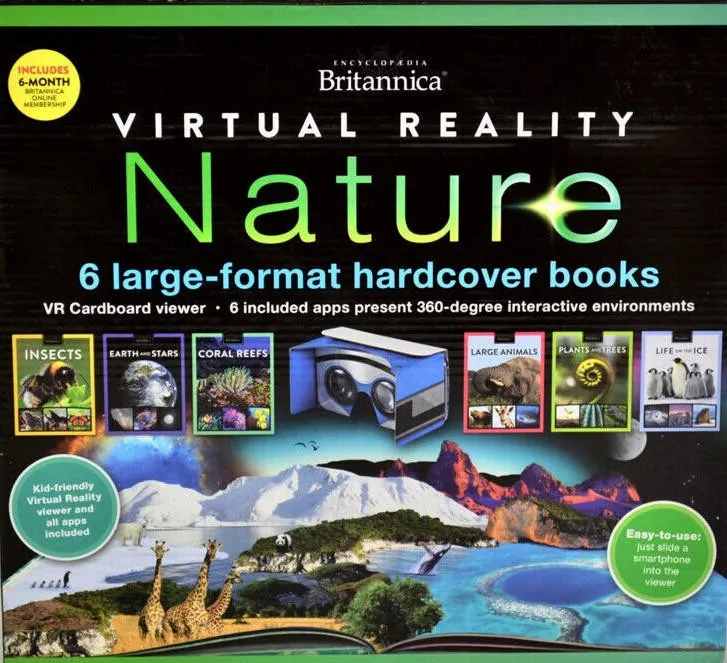 Photo: Encyclopedia Britannica, via cdn11.bigcommerce.com
By 1974, all 32 volumes stood proudly on their dedicated shelf, representing the family's most expensive purchase after their house and car. At $600 — roughly three weeks of Mr. Morrison's factory wages — the encyclopedia set was a major financial commitment. But like thousands of other American families, the Morrisons believed they were investing in their children's futures.
They were right, but not in ways they could have imagined.
When Information Had Weight and Authority
The family encyclopedia occupied a unique position in American household culture. These weren't just books — they were the definitive source of truth for everything from homework questions to dinner table debates. When someone wondered about the capital of Mongolia or the lifecycle of butterflies, the family would trek to the encyclopedia shelf together.
The ritual was deliberate and communal. Someone would pull down the appropriate volume — carefully, because these books were heavy and expensive — and the family would gather around as the designated reader found the entry. The information was authoritative, carefully researched, and written by experts. There was no questioning its accuracy, no comparing multiple sources, no wondering about bias or agenda.
This physical relationship with knowledge created a fundamentally different learning experience than today's instant digital searches. Information had literal weight. Finding answers required patience and deliberate effort. Most importantly, the encyclopedia represented shared family knowledge — when you looked something up, everyone learned together.
The Economics of Household Knowledge
Encyclopedia sets were expensive, but they were marketed as long-term investments in family education. Sales representatives would visit homes in the evening, when both parents were available, and present the purchase as essential for children's academic success. The pitch was compelling: for the cost of a few months of entertainment, families could own a complete library of human knowledge.
Payment plans made the sets accessible to middle-class families who couldn't afford the full cost upfront. Many families paid $25-30 monthly for two years, making the encyclopedia purchase feel more manageable. Sales representatives emphasized the cost-per-use argument: if the family used the encyclopedias regularly for a decade, the cost per lookup would be pennies.
The marketing worked because it aligned with American values about education and self-improvement. Owning a complete encyclopedia set was a visible symbol that the family prioritized learning. It demonstrated to visitors — and to the children themselves — that knowledge was valuable enough to invest in seriously.
The Yearbook Tradition
Most encyclopedia companies offered annual yearbooks that updated the main set with recent developments. These slim volumes, arriving each year like clockwork, became family events. Parents and children would page through together, learning about the previous year's major discoveries, political changes, and cultural developments.
The yearbooks created a sense of knowledge as something living and evolving, rather than static and complete. Families would debate whether to file the yearbooks with the main set or keep them in a separate location for easy access. Some families created elaborate indexing systems to cross-reference new information with the original volumes.
This annual ritual reinforced the encyclopedia's role as the family's intellectual anchor. The arrival of each yearbook was a reminder that learning was ongoing, that the world was constantly changing, and that staying informed required deliberate effort and investment.
The Homework Revolution
For American schoolchildren in the 1960s, 1970s, and 1980s, homework began with a trip to the family encyclopedia. Teachers assigned research projects with the assumption that students had access to these comprehensive reference works. The encyclopedia became the starting point for virtually every school report, science project, and social studies assignment.
This created a standardized baseline of information that all students could access. Unlike today's internet research, which can lead students down endless rabbit holes of varying quality, the encyclopedia provided curated, age-appropriate information on virtually every topic. Students learned to use cross-references, understand alphabetical organization, and synthesize information from multiple related entries.
The physical limitations of the encyclopedia also taught important research skills. Students couldn't simply copy and paste text — they had to read, understand, and rewrite information in their own words. The limited space of each entry forced them to seek additional sources for comprehensive reports, developing critical thinking about information completeness and reliability.
When Looking Things Up Built Character
The pre-internet process of finding information required patience and planning that modern searches don't demand. If you wondered about something while watching TV, you couldn't instantly satisfy your curiosity — you had to remember the question, get up during a commercial, find the right volume, and locate the entry. Often, this process led to discovering related information you hadn't been seeking.
This delayed gratification created a different relationship with curiosity and learning. Questions percolated in your mind before being answered. The effort required to find information made the answers more memorable and valuable. The physical act of handling books and turning pages engaged different cognitive processes than scrolling through screens.
Families developed their own encyclopedia traditions and rules. Some designated certain children as "encyclopedia experts" who became skilled at quickly locating information. Others created family competitions around encyclopedia trivia. Many families had informal rules about when it was appropriate to interrupt other activities to look something up.
The Authority Problem Nobody Saw Coming
The encyclopedia's greatest strength — its authoritative voice — also created limitations that weren't fully understood until alternatives emerged. The curated, expert-written entries represented a particular perspective on knowledge that reflected the biases and limitations of their time. Controversial topics were often presented with false objectivity, and rapidly changing fields like technology became quickly outdated.
But families trusted encyclopedia information completely. There was no culture of fact-checking, source comparison, or critical evaluation of information sources. The encyclopedia said it, so it was true. This created a generation comfortable with authoritative knowledge but perhaps less skilled at evaluating information critically.
The annual update system, while innovative for its time, couldn't keep pace with rapidly changing fields. By the 1990s, encyclopedia sets were notoriously outdated on topics like computers, current events, and scientific discoveries. Yet families continued to rely on them because they represented the best available option for comprehensive reference material.
The Digital Disruption
The rise of CD-ROM encyclopedias in the early 1990s began the end of the printed encyclopedia era. Suddenly, the same information could be stored on a single disc and searched electronically. The physical weight and shelf space that had once symbolized the encyclopedia's value became disadvantages rather than features.
Encarta, Microsoft's digital encyclopedia, offered multimedia features that printed encyclopedias couldn't match — video clips, audio recordings, and interactive maps. The information could be updated more frequently, and searching was faster and more comprehensive. Most importantly, the cost was a fraction of printed encyclopedias, making comprehensive reference material accessible to families who couldn't afford the traditional sets.
The internet delivered the final blow to the family encyclopedia. Wikipedia, launched in 2001, offered not just the convenience of digital searching but the promise of constantly updated, collectively verified information. The model of expert-curated knowledge gave way to crowd-sourced information that could be updated in real-time.
What We Lost in the Translation
The shift from family encyclopedias to internet searching changed more than just how we find information — it changed how we relate to knowledge itself. The shared family reference source has been replaced by individual devices that provide personalized, algorithm-driven information experiences. The ritual of looking things up together has been replaced by everyone searching separately.
The patience required to find information in printed encyclopedias has been replaced by the expectation of instant answers. The authority of expert-curated information has been replaced by the challenge of evaluating multiple sources of varying reliability. The satisfaction of owning comprehensive knowledge has been replaced by the anxiety of information overload.
Perhaps most significantly, the encyclopedia taught families that knowledge was worth investing in financially and intellectually. The monthly payments, the careful handling of volumes, the dedicated shelf space — all of these reinforced the idea that information had value and that learning required commitment.
The Wisdom of Weighted Knowledge
The family encyclopedia represented something uniquely American: the democratic ideal that comprehensive knowledge should be accessible to every household willing to invest in it. The payment plans made it possible for working-class families to own the same reference materials as wealthy families. The standardized content meant that all children had access to the same foundational information.
Today's information landscape offers unprecedented access to knowledge, but it has lost the encyclopedia's sense of shared authority and communal learning. The 30-pound answer to every question has been replaced by millions of lightweight answers of varying quality and reliability. In gaining the ability to know anything instantly, we may have lost the wisdom that came from the weight of knowledge itself.