The $2,000 Promise That Parents Couldn't Refuse: How Encyclopedia Salesmen Sold the American Dream

The Knock That Changed Everything
Picture this: It's 1965, and a well-dressed man appears at your front door carrying a leather briefcase and wearing a confident smile. He's not selling vacuum cleaners or life insurance — he's selling something far more powerful. He's selling your child's future, packaged in 24 beautiful volumes that will transform your living room into a temple of learning.
The encyclopedia salesman was America's most successful anxiety merchant, and business was booming. Encyclopædia Britannica alone employed over 2,500 door-to-door sales representatives at its peak, generating annual revenues of $650 million. These weren't just books they were selling — they were selling parental peace of mind.
 Photo: Encyclopædia Britannica, via imgv2-2-f.scribdassets.com
The Psychology of Educational Panic
Encyclopedia salesmen understood something profound about American parents: the fear that their children might be left behind. In an era when a college education was becoming increasingly important for middle-class success, parents were desperate for any advantage they could provide.
The sales pitch was masterfully crafted. Salesmen would arrive during dinner time, when the whole family was gathered. They'd engage children with colorful pictures and fascinating facts, then turn to parents with a simple but devastating question: "Don't you want to give your children every opportunity to succeed?"
The implied threat was clear — neighbors who bought encyclopedias were investing in their children's futures, while those who didn't were limiting their kids' potential. This wasn't just about books; it was about what kind of parent you wanted to be.
The Monthly Payment That Felt Manageable
A complete set of encyclopedias cost between $300-500 in the 1960s — roughly equivalent to $2,500-4,000 today. But salesmen rarely mentioned the total price upfront. Instead, they focused on monthly payments: "For less than what you spend on cigarettes each month, you can give your children the gift of knowledge."
This payment structure made an enormous purchase feel accessible to middle-class families. At $15-25 per month, stretched over two or three years, encyclopedias seemed like a reasonable investment in education. Many families made sacrifices elsewhere in their budget to accommodate this "essential" expense.
The Social Status of Leather-Bound Learning
Owning a complete set of encyclopedias wasn't just educational — it was aspirational. These books represented cultural sophistication and intellectual ambition. They signaled to visitors that this was a household that valued learning and invested in their children's education.
Families often displayed their encyclopedias prominently in the living room, arranged by volume number in perfect order. The books became furniture as much as reference material, a visible symbol of the family's commitment to education and self-improvement.
The Ritual of Family Research
Before Google, when a question arose during dinner conversation, someone would walk to the bookshelf and pull down the appropriate volume. This created a family ritual around learning — children would gather around as parents read aloud about dinosaurs, distant countries, or historical events.
These moments served multiple purposes: they satisfied curiosity, demonstrated the value of the family's investment, and reinforced the parents' role as educational guides. The physical act of looking something up required effort and intention, making the discovered information feel more valuable.
The Sales Army That Built an Industry
Encyclopedia companies recruited salespeople with the zeal of a missionary organization. These weren't just employees; they were true believers in the power of education. Many salesmen genuinely believed they were performing a public service, helping families access knowledge that would improve their children's lives.
The best salesmen earned substantial incomes — top performers could make $30,000-50,000 annually in the 1970s, when the median household income was around $12,000. This attracted talented, ambitious people who might have pursued other careers, creating a professional sales force that could compete with any industry.
The Decline of Door-to-Door Dreams
Several factors contributed to the encyclopedia industry's decline. First, changing social dynamics made door-to-door sales increasingly difficult. More women entered the workforce, leaving fewer people home during traditional sales hours. Suburban neighborhoods became less trusting of uninvited visitors.
Second, alternative information sources proliferated. Public libraries expanded their hours and services. Educational television programs brought learning into homes for free. And eventually, personal computers and the internet made vast amounts of information instantly accessible.
The Digital Revolution That Changed Everything
The final blow came from an unexpected source: a CD-ROM called Encarta, launched by Microsoft in 1993. For $99, families could access a multimedia encyclopedia that included video clips, audio recordings, and interactive features that traditional books couldn't match.
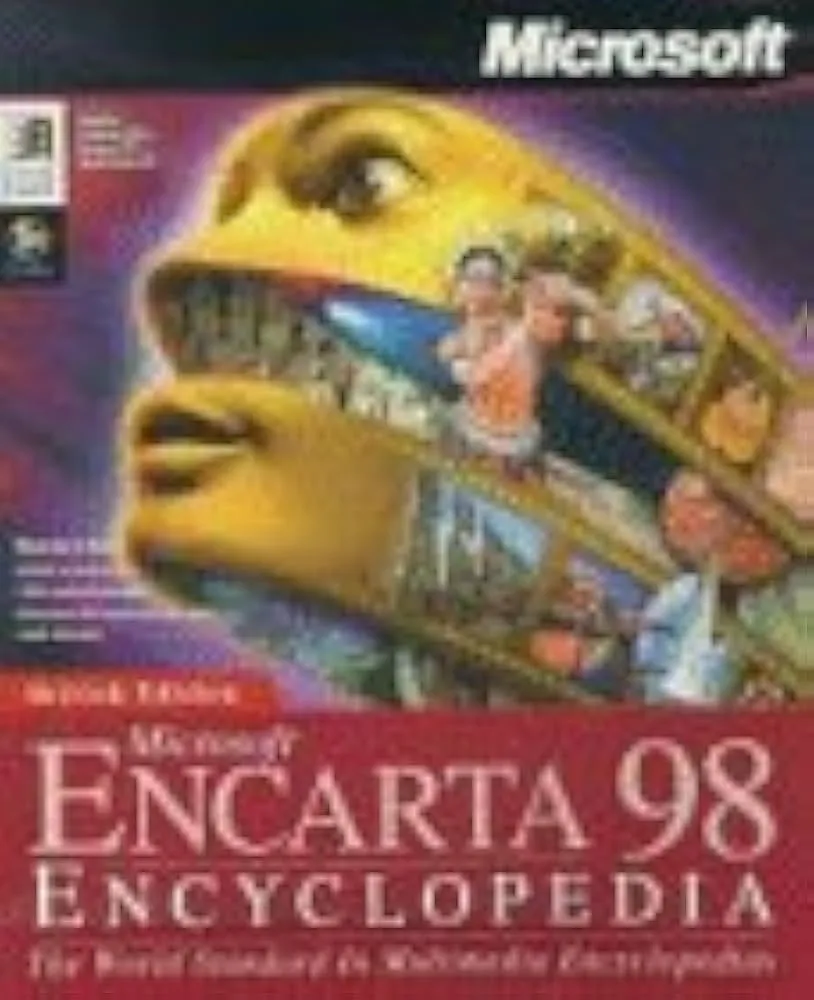 Photo: Microsoft Encarta, via m.media-amazon.com
Suddenly, the value proposition that had sustained the encyclopedia industry for decades crumbled. Why pay thousands for books that would become outdated when you could access current, searchable information for a fraction of the cost?
Modern Anxiety, New Solutions
Today's parents face the same fundamental anxiety that drove encyclopedia sales — the fear that they're not providing enough educational support for their children. But the solutions have evolved dramatically.
Instead of encyclopedias, modern parents invest in coding camps, tutoring apps, SAT prep courses, and educational consultants. The amounts spent are often similar — many families invest $2,000-5,000 annually in supplemental education — but the delivery methods have changed completely.
The Subscription Economy of Child Development
Where encyclopedia salesmen once promised comprehensive knowledge in 24 volumes, today's educational entrepreneurs offer specialized solutions through monthly subscriptions. Kumon math programs, language learning apps, and online tutoring platforms have replaced the one-time encyclopedia purchase with ongoing educational expenses.
The psychology remains remarkably similar: parents willing to sacrifice other priorities to give their children perceived advantages. The difference is that modern educational anxiety never ends — there's always another app, course, or program promising to unlock their child's potential.
What We Lost When the Salesman Stopped Calling
The encyclopedia era represented something unique in American culture: the belief that knowledge itself had inherent value, regardless of its immediate practical application. Families invested in comprehensive learning rather than targeted skill development.
Modern educational technology is undeniably more effective, accessible, and affordable. Children today have access to more information than any generation in history. But something was lost when we moved from the family encyclopedia to individual devices — the shared ritual of learning together, the physical presence of knowledge in our homes, and the idea that education was a family investment rather than an individual pursuit.
The encyclopedia salesman's success wasn't really about books — it was about selling hope, status, and parental love in a format that families could understand and afford. In that sense, they were remarkably successful, creating an industry that thrived for decades by understanding what American parents most wanted to give their children: every possible advantage in an uncertain world.