The Doctor Used to Come to You: How the House Call Disappeared From American Life
Picture this: It's 1950, and your child has a fever that won't break. Instead of bundling them into the car for a trip to the emergency room or urgent care clinic, you simply call the family doctor. Within hours, Dr. Peterson arrives at your front door with his black leather bag, examines your child in their own bedroom, and provides treatment without you ever having to leave home.
This wasn't luxury healthcare for the wealthy — it was standard medical practice across America. House calls were so common that most physicians spent 40% of their time traveling between patients' homes, making medicine as accessible as a phone call.
When Your Living Room Was the Doctor's Office
From the early 1900s through the 1960s, house calls formed the backbone of American healthcare. Family physicians knew not just your medical history, but your family dynamics, living conditions, and daily routines. They'd sit at your kitchen table discussing symptoms, examine patients in familiar surroundings, and often stay for coffee while explaining treatment plans.
The economics made sense too. In 1940, a typical house call cost between $3-5 — roughly equivalent to $60-100 today. Compare that to the average emergency room visit now costing $2,200, and the house call seems like an incredible bargain. Doctors could see 15-20 patients per day traveling between homes, making their practice both efficient and profitable.
Dr. Paul Dudley White, President Eisenhower's cardiologist, famously made over 100,000 house calls during his career. "The home visit reveals things about a patient that no office examination can," he wrote in 1955. "You see how they really live, how they interact with family, what their actual environment looks like."
The Great Medical Migration Indoors
The transformation happened with shocking speed. In 1950, house calls represented 40% of all physician-patient encounters. By 1980, that number had plummeted to just 1%. Today, fewer than 13,000 physicians nationwide — less than 2% — regularly make house calls.
Several forces converged to kill the house call. Medical technology became too sophisticated to transport easily. X-ray machines, laboratory equipment, and specialized diagnostic tools required permanent installations. Doctors found they could see three times as many patients by having everyone come to them rather than traveling between homes.
Suburban sprawl made travel between patients increasingly time-consuming. What once took 10 minutes in a compact neighborhood now required 30-minute drives between subdivisions. Insurance companies began favoring office visits, which were easier to standardize and bill.
Most critically, medicine became hyper-specialized. The general practitioner who could handle everything from broken bones to heart conditions gave way to networks of specialists, each requiring different equipment and expertise that couldn't fit in any traveling bag.
What We Lost in the Waiting Room
The shift to office-based medicine brought undeniable benefits — better diagnostic equipment, access to specialists, more efficient care delivery. But it also fundamentally altered the doctor-patient relationship in ways we're still grappling with.
Modern patients spend an average of 24 minutes in waiting rooms and just 13 minutes with their physician. The intimacy of home-based care — where doctors understood patients' living situations, family dynamics, and daily stresses — disappeared behind sterile examination rooms and hurried consultations.
"When doctors came to your home, they saw everything," explains Dr. Margaret Chen, who studies healthcare delivery at Johns Hopkins. "They noticed the empty medicine bottles, the family tensions, the financial struggles. That contextual information was invaluable for providing truly comprehensive care."
Today's healthcare system struggles with exactly these gaps. Social determinants of health — housing conditions, family support, economic stress — are recognized as crucial factors in patient outcomes, yet modern physicians rarely witness them firsthand.
The Digital House Call Paradox
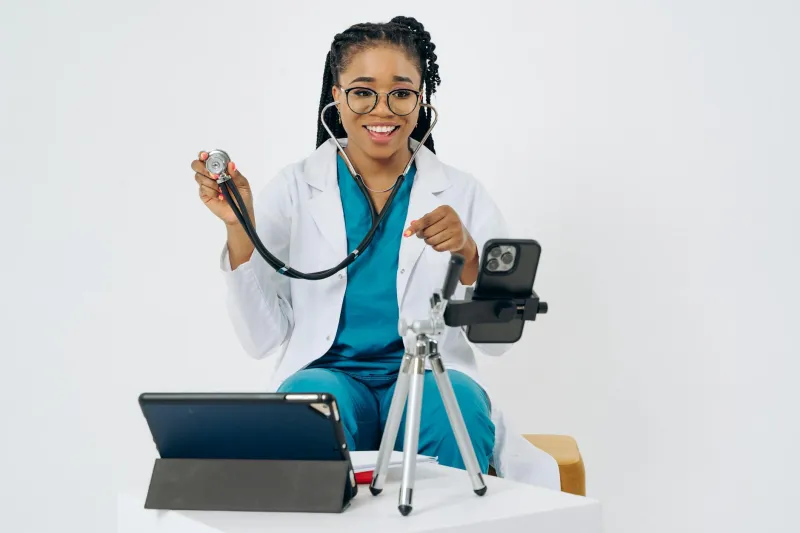
Interestingly, we're witnessing a partial return to home-based care, but in radically different form. Telehealth visits skyrocketed from 38 times pre-pandemic levels, bringing medical consultations back into American living rooms — just through screens instead of in person.
Concierge medicine practices now charge wealthy patients $2,000-10,000 annually for services that include house calls, creating a two-tiered system where home visits are luxury amenities rather than standard care. Mobile urgent care services dispatch nurse practitioners to homes for $200-400 per visit — still expensive, but more accessible than traditional concierge models.
Some innovative practices are experimenting with hybrid models. "Hospital at Home" programs treat certain conditions in patients' residences using portable technology and visiting healthcare teams. These programs report better patient satisfaction and often lower costs than traditional hospital stays.
The Prescription for What's Next
The disappearance of house calls reflects broader changes in how Americans access healthcare — from personal relationships with family doctors to navigating complex specialist networks, from intimate bedside manner to efficient but impersonal medical encounters.
We gained technological sophistication, specialized expertise, and standardized care protocols. We lost the human-scale medicine that understood patients as whole people living in specific contexts rather than collections of symptoms requiring treatment.
As healthcare costs soar and patient satisfaction declines, perhaps it's time to ask whether some elements of that older model — the personal attention, the contextual understanding, the accessibility — might be worth recovering, even in modern form. After all, sometimes the best medicine really does begin with understanding how people actually live.