The Original American Dream Had Calloused Hands
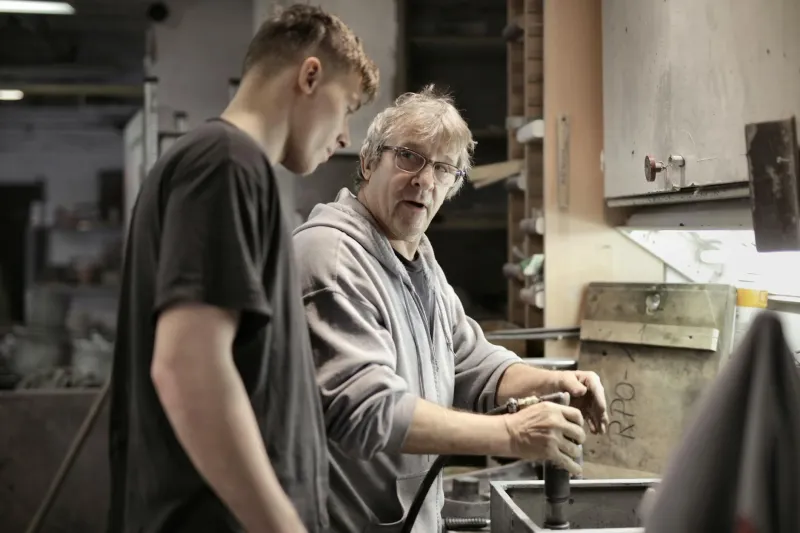
In 1920, a 16-year-old could walk into a blacksmith's shop, a carpentry business, or a plumbing company and ask to learn the trade. No application essays, no standardized tests, no student loans. Just a willingness to work hard and learn from someone who'd mastered the craft through decades of experience.
The deal was simple: you'd start as an apprentice, doing the grunt work while watching and learning. After several years, you'd become a journeyman, competent enough to work independently. Eventually, if you were skilled and ambitious, you'd become a master craftsman yourself, capable of training the next generation.
This system built America. The craftsmen who constructed the Brooklyn Bridge, the Golden Gate Bridge, and countless other marvels learned their trades this way. No classroom theory, no textbook knowledge — just hands-on mastery passed directly from teacher to student.
 Photo: Golden Gate Bridge, via c8.alamy.com
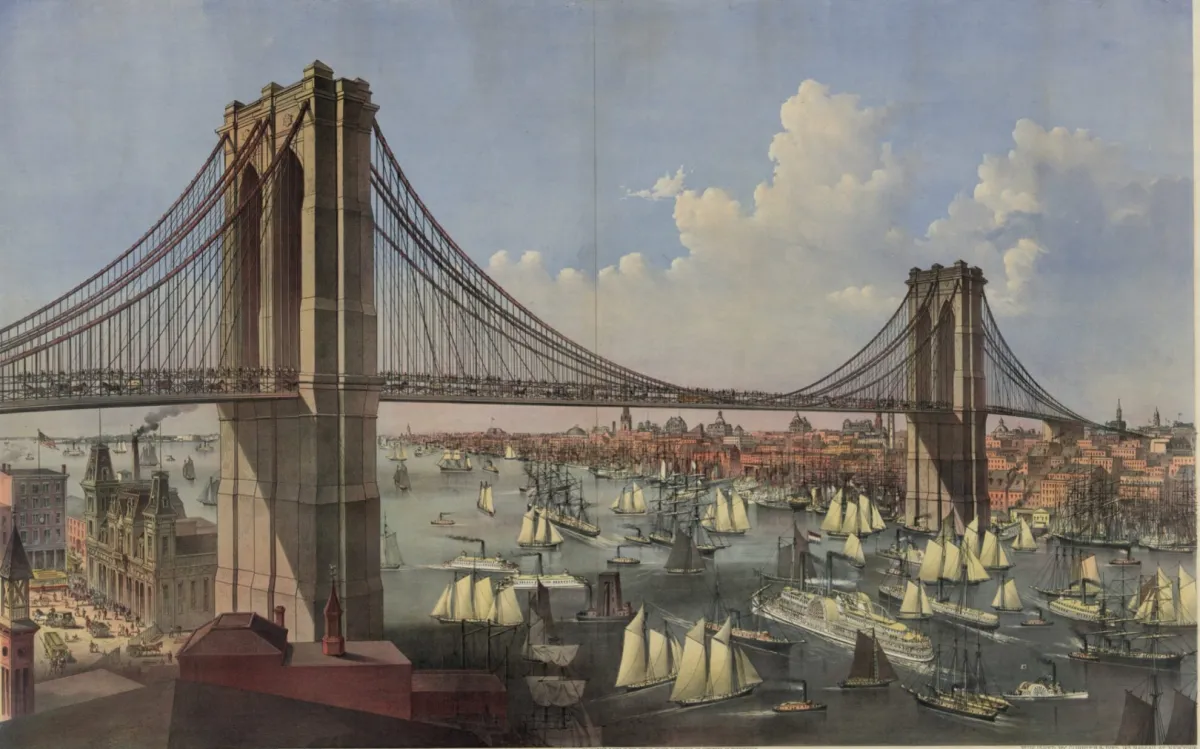 Photo: Brooklyn Bridge, via www.boweryboyshistory.com
Today, that same eager 16-year-old needs a certificate to change a tire professionally.
When Your Mentor Was Your Employer
The apprenticeship model wasn't charity — it was smart business. Master craftsmen got cheap labor from beginners and gradually trained their own skilled workforce. Apprentices got practical education that led directly to well-paying careers. Everyone benefited because the system created exactly what the economy needed: competent workers who understood their trade from the ground up.
A young man (and yes, it was almost always men back then) could start as an apprentice carpenter at 16 and own his own construction business by 25. He'd learned not just how to use tools, but how to estimate jobs, manage materials, solve problems, and satisfy customers. The education was comprehensive and completely practical.
Compare that to today's path: four years of college debt to earn a degree that might or might not relate to your eventual career, followed by entry-level positions that still require "training" because college didn't actually teach you how to do the job.
The Great Credentialism Shift
Something fundamental changed in American thinking after World War II. The GI Bill made college accessible to millions of veterans, and higher education became associated with upward mobility. Slowly but steadily, Americans began to believe that "real" careers required college degrees.
 Photo: GI Bill, via studentaffairs.uga.edu
By the 1980s, high school guidance counselors were pushing every student toward four-year colleges. Trade work became stigmatized as something for people who "couldn't make it" in college. Parents who'd worked with their hands their entire lives encouraged their children to pursue white-collar careers that wouldn't leave them dirty at the end of the day.
The irony is profound: we began looking down on the very skills that built the country we were so proud of.
Meanwhile, regulatory agencies started requiring formal certification for work that had been learned informally for generations. Want to install electrical outlets? You need classroom hours and a licensing exam. Want to cut hair? That requires beauty school. Want to repair cars? Better get certified by an accredited program.
The True Cost of Formal Education
Here's what we traded: a master electrician in 1950 learned his craft over seven years while earning progressively better wages. He graduated debt-free with deep practical knowledge and immediate earning potential.
Today's electrician might spend two years in trade school, accumulating $20,000-$40,000 in debt, then still needs several more years of on-the-job experience to become truly competent. The formal education system added cost and time without necessarily improving the quality of training.
Worse, the emphasis on classroom learning over hands-on experience created a generation of workers who know theory but struggle with practical application. They can pass tests but can't troubleshoot problems that don't match the textbook scenarios.
The Skills Gap Nobody Wants to Acknowledge
America now faces a massive skilled labor shortage. We need millions of electricians, plumbers, welders, and mechanics, but we've created an educational system that steers young people away from these careers and toward college degrees that often lead to lower-paying jobs with less job security.
The average plumber earns more than the average college graduate. Skilled electricians can write their own tickets in most markets. Experienced welders command premium wages. Yet we still treat these careers as consolation prizes for people who "couldn't handle college."
Meanwhile, we've loaded an entire generation with student debt for degrees that often don't lead to stable, well-paying work. The philosophy major working at Starbucks owes $50,000 for an education that didn't prepare them for any specific career. The apprentice-trained plumber owns their own business by age 30.
What the Apprenticeship System Got Right
The old apprenticeship model understood something we've forgotten: real expertise comes from doing, not from studying. You can't learn to weld by reading about welding. You can't become a master carpenter by memorizing wood grain patterns. These skills require muscle memory, problem-solving experience, and the kind of judgment that only comes from making mistakes and learning from them.
The master-apprentice relationship also created something missing from modern education: mentorship. The master craftsman had a personal investment in their apprentice's success. They passed down not just technical skills, but professional wisdom, business sense, and work ethic.
Modern trade schools can teach techniques, but they can't replicate the relationship between a master who's spent 30 years perfecting their craft and an apprentice who's eager to learn everything they know.
The Path We Abandoned
For most of American history, young people had multiple paths to prosperity. College was one option, but so was learning a trade, starting a business, or working your way up in a company. We've narrowed those options to essentially one: get a degree or get left behind.
This wasn't progress — it was a mistake that we're still paying for. We created artificial barriers to careers that don't need them, loaded young people with debt for education they don't need, and created shortages in essential services because we convinced everyone they were too good for "manual labor."
The apprentice who learned by doing, earned while learning, and graduated debt-free with immediately marketable skills wasn't getting a second-class education. They were getting exactly the preparation they needed for a prosperous career.
We could learn something from them.