America's Original Search Engine Weighed 20 Pounds: Inside the Yellow Pages Era
The thud was unmistakable. Every October, like clockwork, it would land on American doorsteps with the weight of a small anvil: the new phone book. Not just one book, actually, but usually three — the white pages for residential listings, the blue pages for government offices, and the mighty Yellow Pages for businesses.
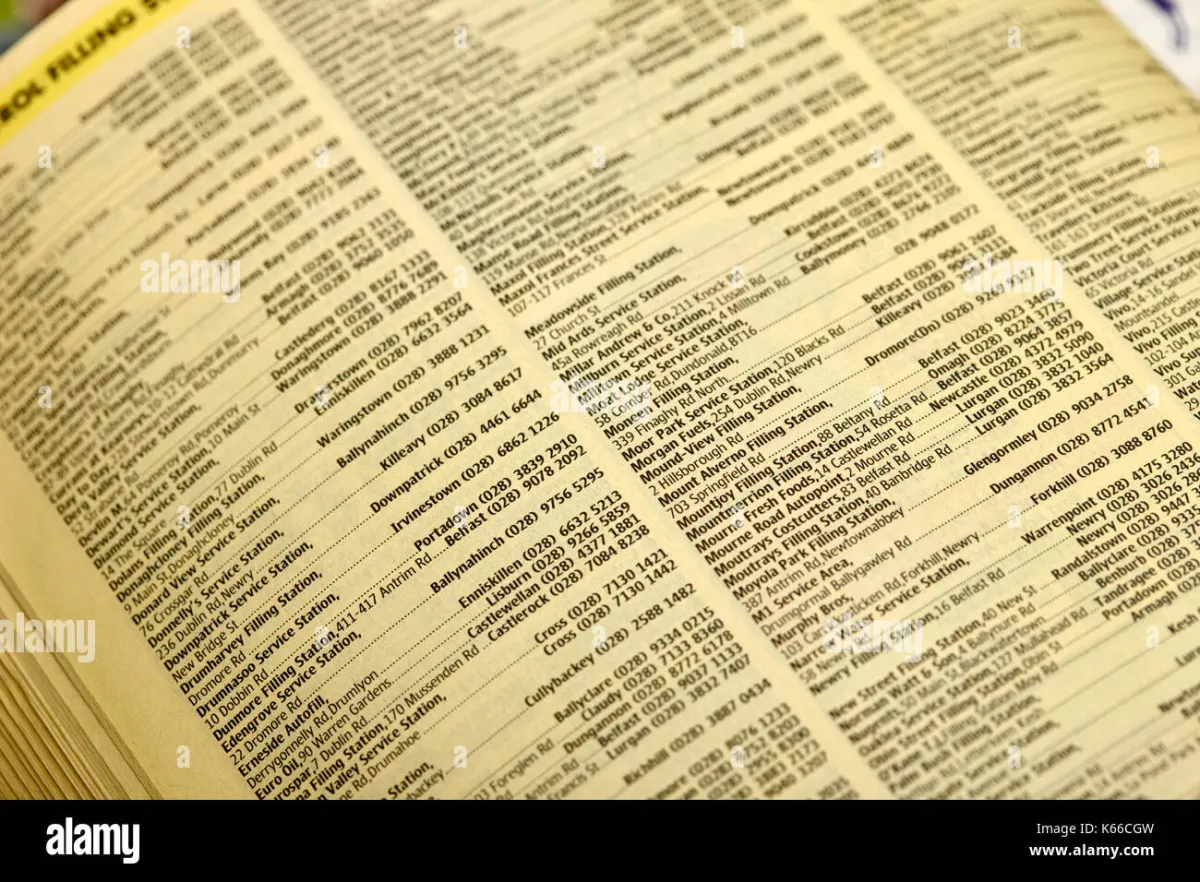 Photo: Yellow Pages, via c8.alamy.com
In major cities like Chicago or Los Angeles, the Yellow Pages alone could top 1,500 pages and weigh nearly 20 pounds. It was America's original search engine, and for most of the 20th century, it was the only way to find anything.
 Photo: Los Angeles, via c8.alamy.com
The Paper Internet That Lived in Your Kitchen
Imagine trying to navigate modern life without Google, Yelp, or even a basic internet connection. That was reality for Americans until the late 1990s. When your washing machine broke down at 10 PM, you couldn't search "emergency appliance repair near me." When you wanted to try Ethiopian food for the first time, there was no algorithm to suggest restaurants based on your location and preferences.
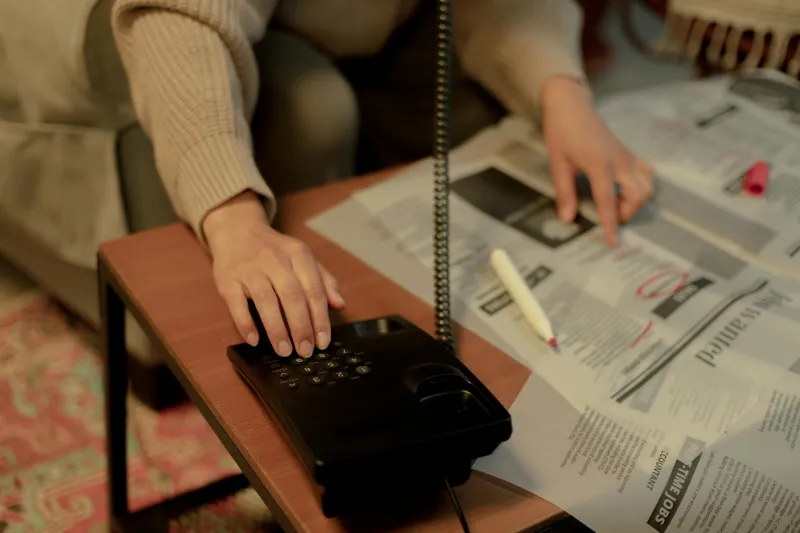
Instead, you walked to wherever you kept the Yellow Pages — usually a kitchen drawer, hallway closet, or that special shelf next to the phone — and began the ritual of paper-based discovery.
The Yellow Pages weren't just a directory; they were a comprehensive map of local commerce. In 1985, the average metropolitan Yellow Pages contained:
- 40,000+ business listings
- 2,000+ categories of services
- Detailed maps of every neighborhood
- Coupons worth hundreds of dollars
- Emergency service numbers for every possible crisis
The Art of Analog Search
Finding what you needed required genuine skill. There was no search bar, no auto-complete, no "did you mean..." suggestions. You had to think like the Yellow Pages organized information.
Looking for a plumber? You'd better hope they listed under "Plumbers" and not "Plumbing Contractors," "Drain Services," or "Water Heater Repair." Each category was its own universe, alphabetically arranged and packed with competing claims.
Smart searchers developed strategies:
The Cross-Reference Method: Check multiple related categories. Car trouble might be under "Auto Repair," "Mechanics," "Transmission Services," or "Towing."
The Ad Size Analysis: Bigger ads usually meant bigger, more established businesses — but also higher prices. The tiny one-line listings were often family operations with competitive rates.
The Location Mapping: Before GPS, you had to manually calculate which business was actually closest to you using the provided street addresses and neighborhood maps.
The Coupon Hunt: Smart consumers flipped through every page looking for discount coupons before making any calls.
When Local Really Meant Local
The Yellow Pages created a fundamentally different relationship between consumers and businesses than what exists today. Every listing represented a physical location in your community. There were no nationwide chains dominating search results, no algorithm deciding which businesses you should see first.
If you looked up "Pizza" in 1980s Yellow Pages, you'd find:
- Tony's Pizza on Main Street (been there since 1962)
- Mama Lucia's Italian Kitchen (family recipes, dine-in only)
- College Town Pizza (late-night delivery, cash only)
- Pizza Palace (new location, grand opening special)
Each business had to compete on equal terms within their alphabetical position. Success depended on local reputation, word-of-mouth referrals, and the creativity of their Yellow Pages advertisement — not on SEO optimization or Google AdWords budgets.
The Economics of Paper Discovery
Yellow Pages advertising was expensive, which created an interesting economic filter. Only businesses serious about serving local customers could afford prominent placement. This meant the directory was curated by market forces — fly-by-night operations couldn't sustain the annual advertising costs.
A full-page Yellow Pages ad in a major city cost between $3,000 and $15,000 annually in 1990s dollars. For many small businesses, their Yellow Pages presence was their largest marketing expense. This investment forced business owners to think strategically about their positioning and messaging.
Unlike today's pay-per-click advertising, Yellow Pages ads worked for an entire year. Business owners crafted their messages carefully, knowing customers would see the same ad hundreds of times. The result was advertising that focused on core services, local credentials, and building trust rather than generating quick clicks.
The Ritual of Discovery
Using the Yellow Pages was a social activity. Families gathered around the kitchen table to plan weekend activities, flipping through restaurant listings and entertainment options. Friends called each other to share discoveries: "Did you know there's a Lebanese restaurant on Fifth Street? It's in the Yellow Pages!"
The physical nature of the directory created a browsing experience impossible to replicate digitally. While searching for a plumber, you might stumble across an intriguing ad for a pottery class, a vintage furniture store, or a pet grooming service you never knew existed.
This serendipitous discovery shaped how Americans learned about their communities. The Yellow Pages weren't just functional — they were educational, introducing residents to the full scope of local commerce and services.
When Information Had Weight
The annual arrival of new phone books marked time in American households. Old directories were recycled, but not before being thoroughly mined for useful information. People tore out frequently-used pages, wrote notes in margins, and circled favorite businesses.
Unlike today's ephemeral search results, Yellow Pages listings had permanence. Businesses that earned a customer's trust got their pages bookmarked, dog-eared, and referenced repeatedly throughout the year. This created genuine customer loyalty — once you found a good mechanic or reliable electrician in the Yellow Pages, you stuck with them.
The Death of Analog Search
The decline was swift and brutal. In 2000, virtually every American household received phone books. By 2010, many cities had stopped automatic delivery. Today, requesting a phone book requires a special order, and most arrive as thin pamphlets rather than comprehensive directories.
What killed the Yellow Pages wasn't just the internet — it was the fundamental change in how Americans relate to local businesses. Google doesn't just provide information; it provides instant gratification. Why flip through hundreds of pages when you can get results in 0.3 seconds?
But something was lost in that transition.
The Community Database
The Yellow Pages represented more than business listings — they were a comprehensive database of community capability. Every skill, service, and specialty available in your area was catalogued and accessible. This created a sense of local self-sufficiency that's hard to replicate in our globalized, digitized world.
When your grandfather needed a watch repaired in 1975, he knew exactly where to look: "Watch Repair" in the Yellow Pages. He'd find three local options, compare their ads, and choose based on location, price, or reputation. The entire transaction stayed within his community.
Today, that same search might lead to Amazon's watch repair service, a mail-in operation in another state, or a YouTube tutorial suggesting you fix it yourself. The local watch repair shop — if it still exists — is buried on page three of Google results, invisible unless you specifically search for it.
The Weight of Knowledge
Those 20-pound Yellow Pages weren't just heavy because of paper and ink. They carried the weight of complete local knowledge — every business, every service, every opportunity in your community bound together in one comprehensive resource.
When the last phone book got recycled, Americans didn't just lose a directory. We lost a shared reference point, a common starting place for discovery, and a physical reminder that our communities contained everything we needed.
The information is still out there, scattered across websites and apps and digital platforms. But it will never again arrive on our doorstep with that satisfying thud, ready to serve for an entire year, requiring nothing more than the ability to read and the patience to search.
Somehow, that feels like a loss worth measuring — not in megabytes or loading times, but in pounds.